Menu Design
A menu is not a business card with a price list. It is probably the most frequently used brand piece in a restaurant and the one with the longest reading time. Anyone reading the menu for three minutes is not just deciding what to eat, they are deciding whether to come back. We design menus across Germany so they work for guest and service alike, with materials that last five seasons and a logic that grows with the kitchen.
What sets a good menu apart
Order first. Guests read top left, then bottom right, then the rest. What should sell belongs in the sight lines. Prices sit to the right of the dish, not in a separate column, because that breaks the reading flow and makes the menu feel more expensive than it is. Descriptions are kept short: three to five main ingredients, no marketing adjectives. Anyone reading it three times does not order.
Materially we recommend per house: for cafés and fast lunch spots a wipeable card or oilcloth cover that still works after a hundred wipes. For restaurants with seasonal motion a leather sleeve in A4 or A5 with a replaceable insert on 120 to 170 g natural paper, reprinted every four weeks without design effort. For premium houses a natural board with hot foil and binding. We recommend what fits the service concept, not what sits on a Pinterest mood board.
How the menu sits in the brand system
The menu is part of a larger print set. It speaks with the beverage menu, the restaurant stationery and the chalkboard at the entrance, ideally from the same type family and colour palette. If café branding is built in parallel, we start with the menu because it has the longest reading time. A typical project lands between €1,200 and €4,500, depending on format, material and language versions. We name the range honestly before the proposal.
Legible by candlelight and daylight
Typography, contrast and line spacing are chosen so the menu works at the evening table just as well as during lunch service by the window.
Seasonal menus without a new design brief
The menu is built as a template with clearly defined areas for daily dishes. A season change happens in an hour, not a project.
Material that survives the counter
Oilcloth, leather sleeve, wipeable card or replaceable insert. We recommend the build so the menu lasts five seasons, not one.
Service logic before design statement
A menu is a tool for the service, not an exhibition surface. Order, grouping and price placement follow the ordering logic.
Selected work

Leni's Café – Branding
A café brand like a handwritten note: watercolour menu, packaging and type for a small café.
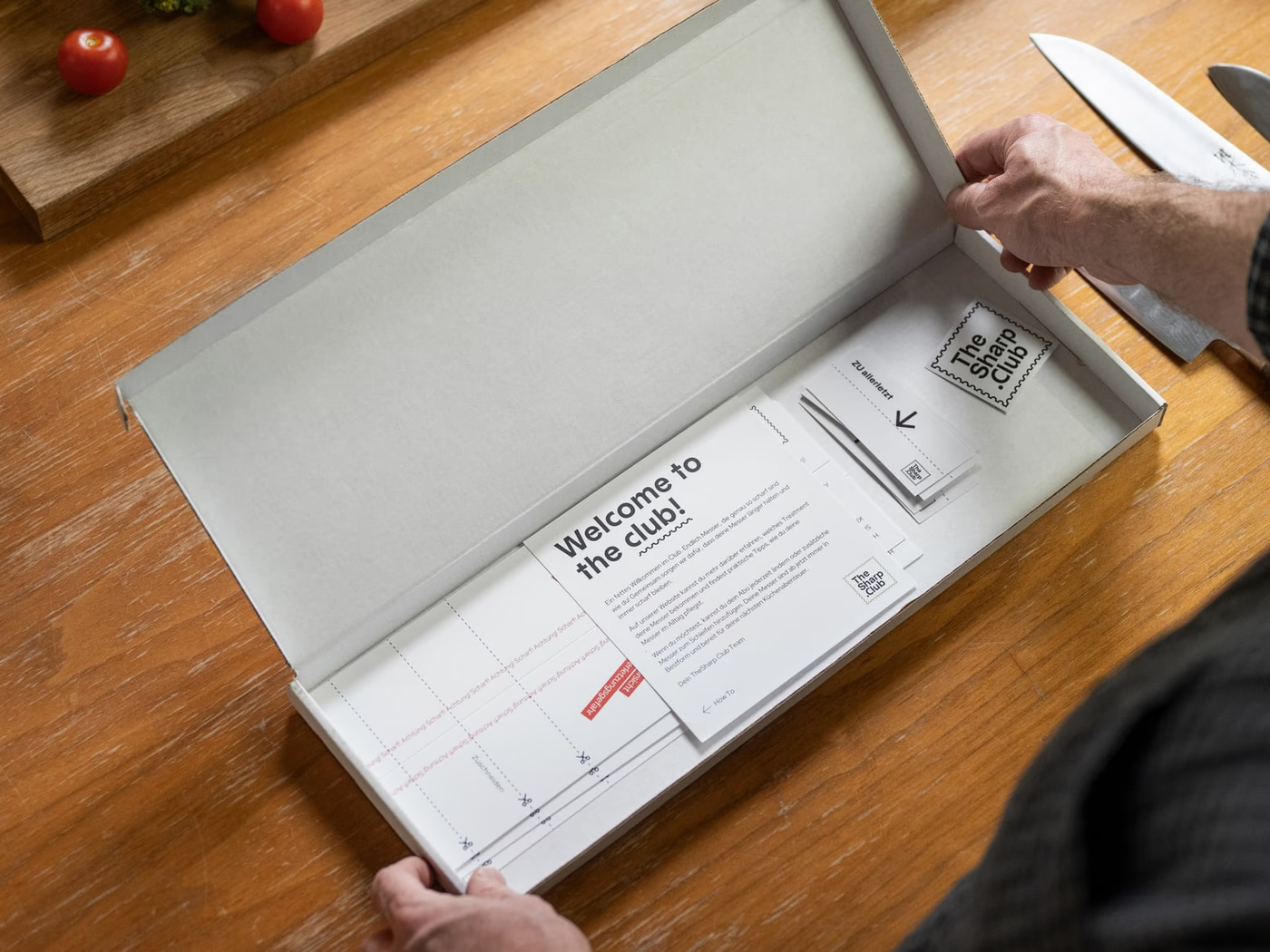
TheSharp.Club – Packaging Design
Packaging as ritual: labels, box and banderole for a blade club that celebrates craft.

Weingut Werner – Wine Labels
From vineyard to shelf — labels that translate the character and origin of a small winery into a visual language of its own.
Frequently asked
A standalone menu design with layout, print data and a recommendation for material and printer typically lands between €1,200 and €4,500. With leather sleeve, replaceable insert or multiple language versions it moves into the upper range. Bundled with [café branding](/en/branchen/gastronomie/cafe) the menu share comes down.
From briefing to proof, 3 to 6 weeks is realistic. If the brand already exists and the dish list is final, it moves faster. If a logo is being developed in parallel, we sequence the phases.
For menus with seasonal motion we like leather sleeves with a replaceable 120 to 170 g natural paper insert. For robust lunch menus oilcloth or a wipe down coated card. For premium houses a natural board with hot foil stamping is an option.
Yes. We build it so German and English run side by side or as a flipped spread. For tourist locations the version with the primary language up front and the translation in a smaller weight has proven itself.
Yes. Restaurants in every region of Germany are part of the normal project landscape. Briefings, layout rounds and proof reviews run entirely remote. Finished menus ship directly from the printer or bindery.
Start a project?
Tell me briefly what it is about — in a 30-minute first conversation we clarify whether and how we can work together.