Portfolio Website
A portfolio website is the calling card for designers and studios. But it is more than that. It is the filter clients use to decide whether to call or to keep scrolling. A designer website or studio website has to show the work, sure, but it also has to explain a stance, surface a method, and build a little trust before the first conversation. We build portfolio sites that do exactly that.
What separates a good portfolio site from the next
Most portfolios look surprisingly alike. Hero with showreel, grid of cases, short about, footer with email. That works, but it does not differentiate. We build the sites differently because we move the brand strategy of your studio into the foreground. What is your method, what are your themes, where does your edge sit.
Cases become small editorials instead of image strips. We write the context, describe the briefing job, show what we worked on, and what result can be measured. That makes the portfolio more credible than any 4K animation. Anyone considering working with your studio is not really looking for images, they are looking for reassurance.
The visual identity of your studio shapes the website. Typography, color, grid, image logic. When the studio is still finding its position, we add a brand workshop before web design starts.
How we build
We build portfolio sites either in Framer or Webflow. Framer is often the right call for animation-heavy studios or smaller teams that want to publish themselves quickly. Webflow fits better when the CMS is more complex, several collections exist, or editorial workflows involve more than one person.
The CMS stays lean. Four collections usually cover everything: cases, notes or journal, about, press. Each collection has its own template, so a new case study posting goes live in under ten minutes. Images ship as WebP or AVIF, lazy loading is standard, animations stay sparse.
Before launch we set up technical SEO, an Open Graph configuration for social sharing, and a short CMS onboarding with Loom recordings. A maintenance or update plan is available afterwards.
Show the work, explain the stance
A portfolio website is more than a photo gallery. It translates your position, your method, and the traces you leave.
Cases over carousels
We build long-form case studies instead of stacked visuals. Context, brief, response, proof. So the site talks to clients, not only to peers.
Editorial logic in layout
Generous typography, clear hierarchy, a grid that breathes. The studio feel emerges in the details, not in the slider.
A CMS that scales
Cases, notes, about, press. Four collections, one clear logic, and you publish new work in minutes without involving the designer.
Selected work
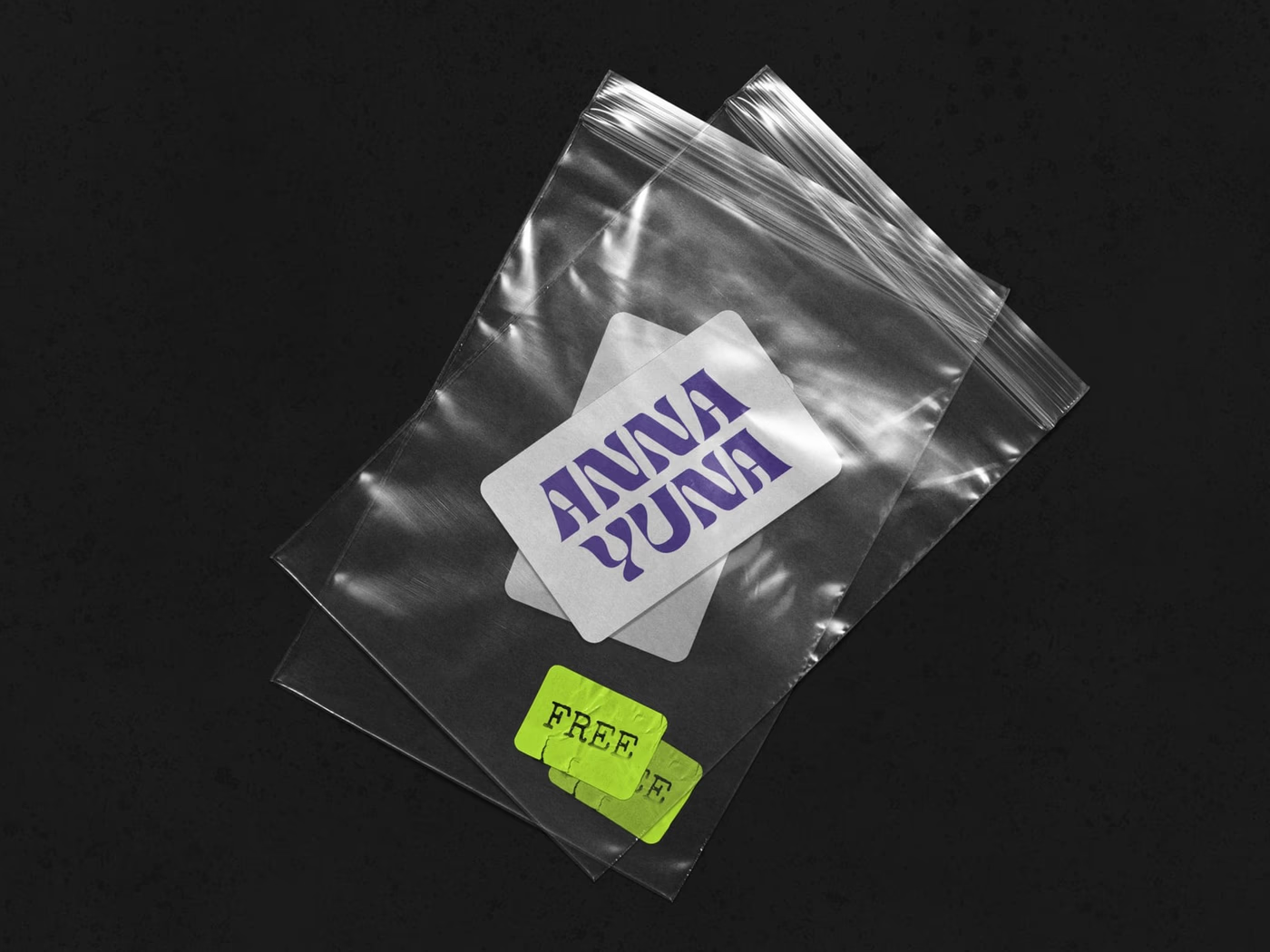
ANNA YUNA – Music Branding
A visual language that oscillates between neon light and moonlight — cover artwork and stage presence for a musician.

Finanzguru – Brand Design
A fintech brand that works inside a subway tunnel: campaigns, iconography and tone of voice for Finanzguru.

Super Me – Mental Health Game
Pixel heroines, bold colours and a neon-pink tone — character and brand world for a mental health game.
Frequently asked
A fully designed portfolio site with CMS, case templates, and multiple overview pages typically lands between € 6,500 and € 16,000. A pure single-page designer site starts at € 3,500.
From kickoff to go-live, 4 to 10 weeks is realistic. Faster is possible when cases are already prepared, otherwise we plan two to three weeks for case curation.
Both work. Framer is often faster for animation-heavy portfolios or studios that want to publish themselves with design control. Webflow is stronger when the CMS is more complex or several languages run with an editorial team.
We structure cases and propose storylines, handle image selection and retouching briefs. We do not write copy ourselves but partner with writers when you do not have an in-house voice.
Yes. Studio Rotstich is remote first, reviews run on video. Clients sit in Cologne, Leipzig, Vienna, Zurich, Munich. On-site sessions across the DACH region work when a studio prefers an in-person kickoff.
Start a project?
Tell me briefly what it is about — in a 30-minute first conversation we clarify whether and how we can work together.