Branding for Breweries
A brand that holds from the swing-top label across the crown cap to the beermat and connects brew, style and six-pack. For breweries across Germany.
A brewery rarely sells just beer. It sells a brewing tradition, a region, an end-of-day ritual. Since the Reinheitsgebot of 1516, beer in Germany has been more than a drink: it is a cultural carrier. For that ritual to form today, the brand has to work in several places. On the label at the beverage market. On the six-pack box. On the crown cap that disappears between thumb and opener. And on the beermat that is soaked through after the second glass. A strong brewery brand carries through all these sizes and materials without losing its signature.
Where the beer decision actually happens
Most beer decisions are made at the beverage market. Not online, not at the tap. A six-pack stands next to thirty others, the aisle is three metres long, the decision takes under ten seconds. If you do not stand out among the other brands on the shelf, you do not even land in the cart. Strong brand work for breweries therefore starts with a simple question: how does your six-pack look on the shelf and where does your accent sit without the style becoming unrecognisable?
Craft breweries have a structural problem here. IPA, NEIPA, Stout, Pale Ale, maybe a Doppelbock special series on top. Every style wants its moment, yet everything should still read immediately as the same brewery. That is not a colour or font problem. It is a label design system problem. We build sub-label logic where the core range stays legible and every special brew label still gets its own character.
And then there is gastronomy. The pilsner glass with logo, the beermat that lands in the guest's hand three times between order and bill, the tap badge above the bar. These small surfaces are the second brand chain, running parallel to retail. Whoever sells there needs its own application system. A brand that only works on the supermarket shelf does not carry at the bar.
According to the Brauer-Bund, there are around 1,500 breweries in Germany. Many of them are competing for the same shelf placements. Differentiation through taste alone is not enough, because taste only happens after the purchase.
What actually goes into it
A typical brewery project with us starts with a brand workshop. Range structure, channel weighting (retail versus gastronomy), price positioning. Breweries that want everything at once (tradition, craft, specials, organic) rarely win one segment completely. That is not a judgement on beer quality. It is a question of clarity.
Then comes brand design: logo, typography, colour and image language. For breweries, typography is often underestimated. A brewery with ambition needs a text typeface that works on the label, not just a logo printed large on the six-pack box. Then the label system: swing-top, longneck, can, each with its own paper and print specifications. For labels with finishing (hot foil stamping, spot varnish, letterpress), we work with print data to FOGRA profile.
The six-pack sleeve and the folding carton are the next stage. GS1-EAN codes for retail can be integrated here. For returnable bottles with deposit, a neck band and label neck strap are added. And if a brewery wants to switch to sustainable packaging later, it is worth thinking ahead: paper type, adhesive and ink properties determine whether a label stays in the recycling stream.
Similar brand questions arise in other drinks categories: at distilleries and spirits brands or at wine estates. What sets a brewery apart: the format spectrum is wider, the pace of range extension faster. Craft breweries sometimes release four new brews per quarter. Without a scalable design system, that cannot be executed cleanly.
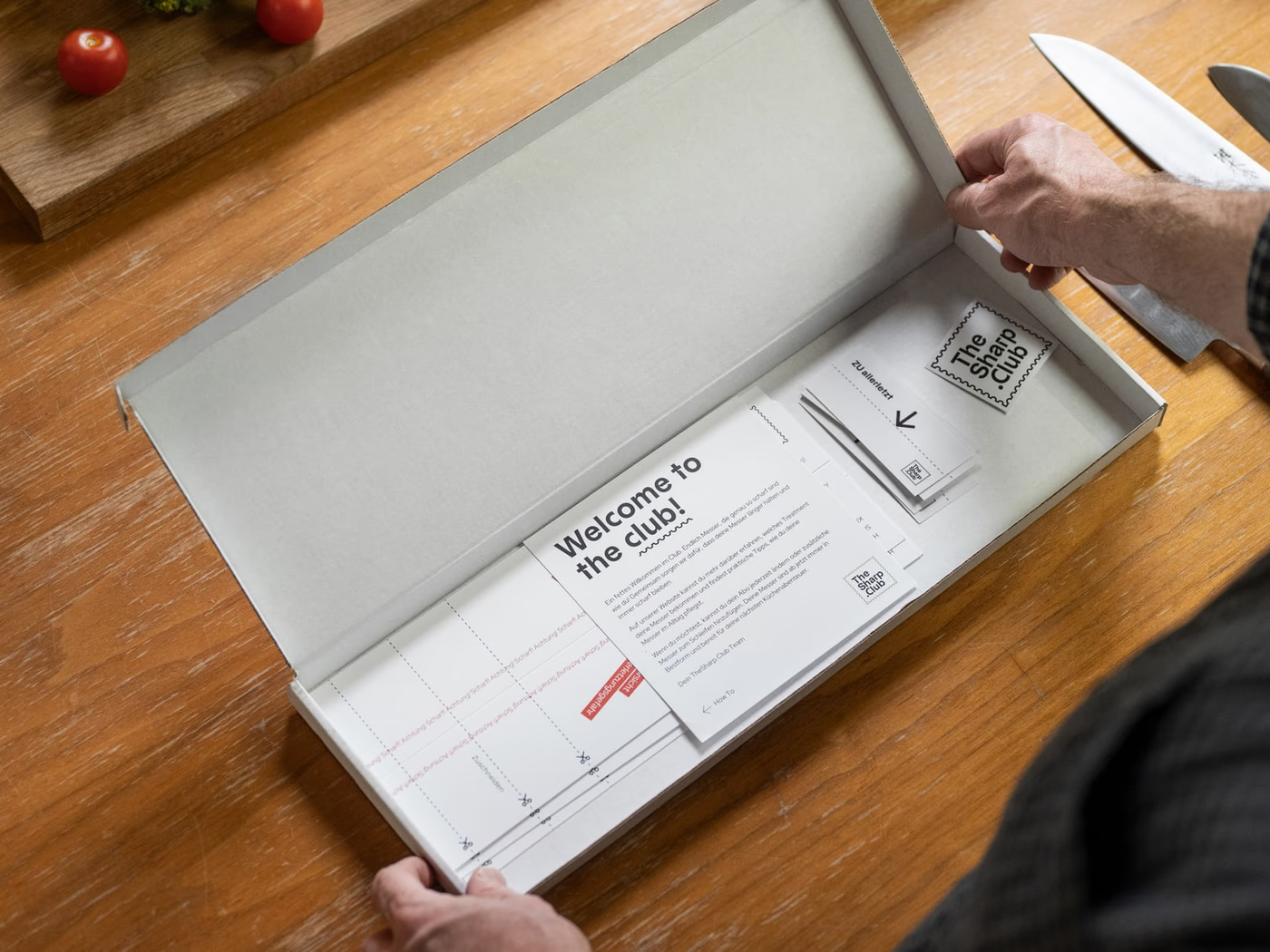
Those interested in the topic will find more background on print pre-press and material decisions in the blog post on packaging design. And through the TheSharp.Club reference we show what a packaging system for a drinks brand looks like in practice. Questions about a project? The contact page is the straightforward way in.
- 01
Label, cap and mat as a system
A brewery rarely runs just one beer. Pilsner, lager, wheat, pale ale, seasonal brews. We build a label system in which each style gets its own tone and all of them clearly belong to the same brewery.
- 02
Swing-top, longneck and can side by side
A modern brewery sells in several formats. We design label and sleeve so swing-top, longneck and can share the same accent without the brand falling apart on a format change.
- 03
Six-pack box as the counter stage
In the beverage market, beer does not sit alone, it sits in a six-pack. The box is the actual storefront and should be designed as a brand surface, not as a carry shell.
- 04
Tap presence for the trade
Beer mats, glass logos, tap badges, aprons. If you sell into gastronomy, you need a second application layer that works at the bar, not just on the supermarket shelf.

Frequently asked
- What does branding for a brewery cost?
- A complete brewery branding with logo, visual identity, label system for the core range, crown cap print, six-pack box and beer mats typically lands between €5,000 and €18,000. We clarify the scope in a first conversation, depending on the number of styles, formats and the state of any existing brand.
- How long does a brewery relaunch take?
- A complete brand relaunch for a brewery with several styles usually takes 8 to 14 weeks. Labels and crown cap print can be submitted in parallel to the six-pack production so the launch does not hinge on a single component.
- How does crown cap print work in practice?
- The crown cap is small but effective. We design it with a reduced detail (initial, style symbol, brew number) that stays recognisable from across the six-pack. Print runs through crown cap printers we recommend.
- Do we really need beer mats and tap badges if we mainly sell in retail?
- Only if you want to enter gastronomy. If brewery and beverage market are your main channels, label, six-pack box and maybe a glass logo are enough. We build the application set along the sales channels you actually serve.
- Do you work across Germany?
- Yes. Breweries from every region of Germany are part of the normal project portfolio, from traditional houses in the south to craft breweries in the north and east. Briefings, workshops and proofs run entirely remote; on-site visits for tastings or brewing days are planned separately.
Start a project?
Tell me briefly what it is about — in a 30-minute first conversation we clarify whether and how we can work together.