Poster & Billboard Design
A poster has about two seconds of attention. Anyone walking by, getting off a bus, waiting for one, gives an A1 on an advertising column no more than that. In these two seconds something has to stick. A form, a sentence, an image, an occasion. Anyone wanting to place a message with three sub-arguments has misread the format. We design posters so they work in two seconds and stay interesting for two minutes.
What a poster carries
A good poster has a hierarchy of at most three elements: a dominant form (typography, image, colour field), a clear statement and an information line (what, when, where). When these three get in each other's way, the poster loses. Concretely, we decide early which element carries the composition. For a cultural poster it is often the typography in a distinctive display cut, for a theatre poster the image, for a festival poster sometimes a colour or shape decision that holds an entire programme together.
Format discipline is the second condition. A2, A1, B1, CLP and 18/1 are not scaled variants of the same layout. A poster that works in A2 can feel empty in B1. An 18/1 large surface needs different hierarchies than an A1 theatre poster. We set the composition for the actual planned format and check legibility from real distance, not only on screen. A concert poster series lives differently than a large-format image campaign.
Riso, screen print, offset and what they can do
The print process is part of the statement. Riso print (e.g. with printers like Druckhaus Sportflieger, Distanz or smaller Riso studios) fits runs of 50 to 1,000 pieces, with grainy spot colours, slight print variation and a character-rich print image. Screen print has its own materiality, carries saturated colours and fits runs of 100 to 2,000 pieces, especially for posters meant to work as collectibles too. Offset is the standard from 500 pieces for classic posters. Large-format outdoor (18/1, CLP) almost always runs offset or digital.
On request we attend press proofs. For Riso and screen print, on-site attendance is often useful because the print result is less predictable than in offset. A campaign with 18/1 large surfaces runs differently, because outdoor advertising providers (Ströer, Wall, JCDecaux) impose specifications and print processes. We know the data and deliver print-ready. What we do not do: posters that look good in a small preview on a 27-inch monitor and fall apart in B1 on an advertising column. We test on the actual format.
One statement, not a search image
A good poster has a clear thought and a strong form. We reduce until the essential stands, not add until everyone is accommodated.
Format discipline from A2 to B1
A2, A1 and B1 are the standard formats; city-light posters (CLP) and 18/1 large surfaces sit alongside. Each format demands its own composition.
Typography that reads from ten metres
Poster type needs different setting rules than magazine typography. We work with proven display cuts and check legibility from real distance.
Riso print, screen print and offset, depending on occasion
We know the difference between a 300-piece Riso run and a large offset edition. Material and print process get chosen to fit the statement.
Selected work
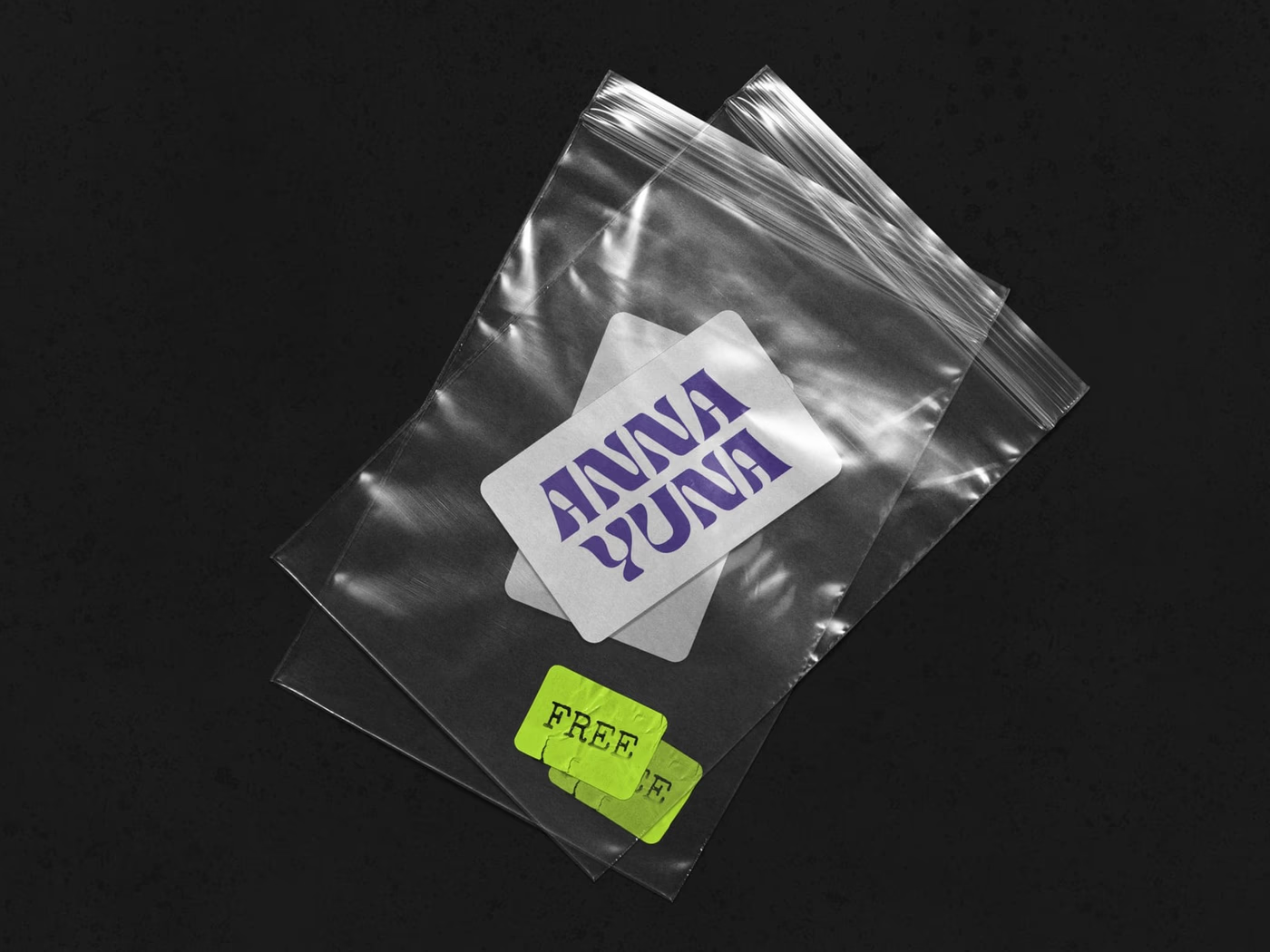
ANNA YUNA – Music Branding
A visual language that oscillates between neon light and moonlight — cover artwork and stage presence for a musician.

Velvet Soul Street – Corporate Design
Streetwear energy in a stitched wordmark: identity, packaging and stationery for a label.
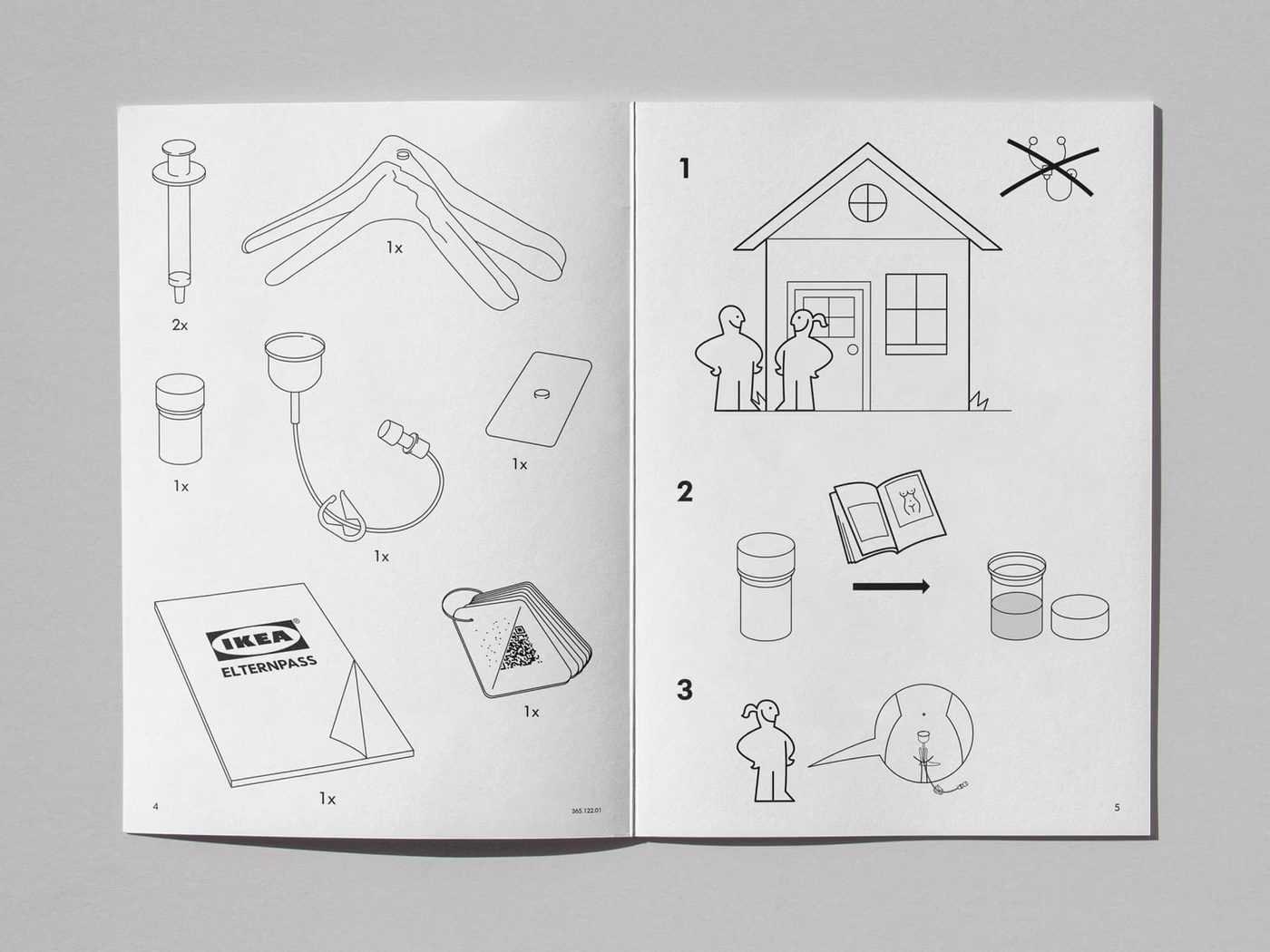
IKEA × AstraZeneca – Concept
Cross-brand concept: how would IKEA package a medical product? A conceptual brand experiment.
Frequently asked
A single poster design with concept, layout and artwork typically lands between €1,200 and €4,500. A poster series or campaign with multiple motifs, shared design logic and image concept starts at €6,000 and reaches up to €18,000 or higher depending on scope. Print costs are separate.
A single motif is realistic in 2 to 4 weeks, depending on review cycles and image material. Poster series for festivals, seasonal programmes or campaigns need 4 to 8 weeks with concept phase and multiple variants.
Riso print fits small runs with character (culture, events, independent), often 50 to 1,000 pieces, with grainy spot colours. Screen print carries runs of 100 to 2,000 pieces, especially for haptic, saturated print results. Offset is the standard from 500 pieces upward for standard posters. Large-format outdoor (18/1, CLP) almost always runs offset or digital.
A2 (420 by 594 mm) for cultural posters and notices, A1 (594 by 841 mm) as the classic theatre and cinema format, B1 (700 by 1,000 mm) for advertising columns and larger notices, CLP (city-light poster, 118.5 by 175 cm) for backlit street furniture, 18/1 (large surface, 3.5 by 2.5 m) for outdoor advertising. We set a separate composition for each format.
Yes. Concept, artwork and press supervision run fully remote. I attend press proofs on site on request (especially Riso and screen print), across Germany.
Start a project?
Tell me briefly what it is about — in a 30-minute first conversation we clarify whether and how we can work together.