Book Design
A book is the format where typography cannot hide. On 200 pages of body text every weakness in the type area shows, every wrong quotation mark variant, every overlooked orphan. That is what makes book design one of the more disciplined tasks in editorial design. We design books so reading feels self-evident. Behind that sits more work than behind a pretty spread.
Type area, microtypography and the book's interior
A book does not begin at the cover but at the type area. How wide is the gutter, how wide the outer margin, where does the folio run, how does the running head sit. These decisions carry the entire book. Concretely, we set the type area based on the chosen typeface, the planned image density and the desired reading pace. A serif like Tiempos Text at 10 point with 15 point leading reads differently than a Garamond Premier Pro at 10.5 point with 13.5 point leading. Both can be right, depending on the book.
Microtypography is the second, invisible layer. True small caps instead of shrunk capitals. Old-style figures in body text, lining figures in tables. Drop or raised initials at chapter starts. Widow and orphan control. Correct German quotation marks (»« or „"). These details do not show individually but are the difference between a book that can be read and one that wants to be read. We work in InDesign with consistent paragraph styles, GREP styles and a documented correction mark system so editing and proofreading can run cleanly.
Material, binding and the book in hand
A book is an object. How it opens, how it lies, how it ages, is part of the design. Thread binding with hardcover carries books meant to last and to lie open often. Perfect binding with soft cover is the standard solution for fiction and non-fiction. Swiss brochure with open spine fits independent projects, architecture or art books where the book should also lie flat. Natural paper like Munken Pure suits novels and essay volumes; coated paper suits photo books and catalogs.
On request we manage the production through to delivery. We know bookbinders and printers (e.g. Kösel, Beltz, Pinsker, Memminger MedienCentrum) and can recommend per project. Dummy books get tested before the main print run, press proofs are attended, packaging and logistics coordinated. What we do not do: design books as containers for content without knowing the content. We read the manuscript before setting the type area. Otherwise the book does not carry.
From type area to page edge
We think books in spreads, not single pages. Type area, inner column, folios, marginalia and gutter are set before the first word lands.
Microtypography that does not call attention
True small caps, old-style figures, hanging initials, proper hyphenation, widow and orphan control. The book reads calm because it is.
Material that matches the statement
Thread binding, perfect binding, natural papers like Munken Pure, ribbon markers, headbands. We choose the build so the book feels right.
Production with bookbinder and printer
We know book production houses and attend press proofs and dummy books. From small press to representative photo book.
Selected work

Velvet Soul Street – Corporate Design
Streetwear energy in a stitched wordmark: identity, packaging and stationery for a label.
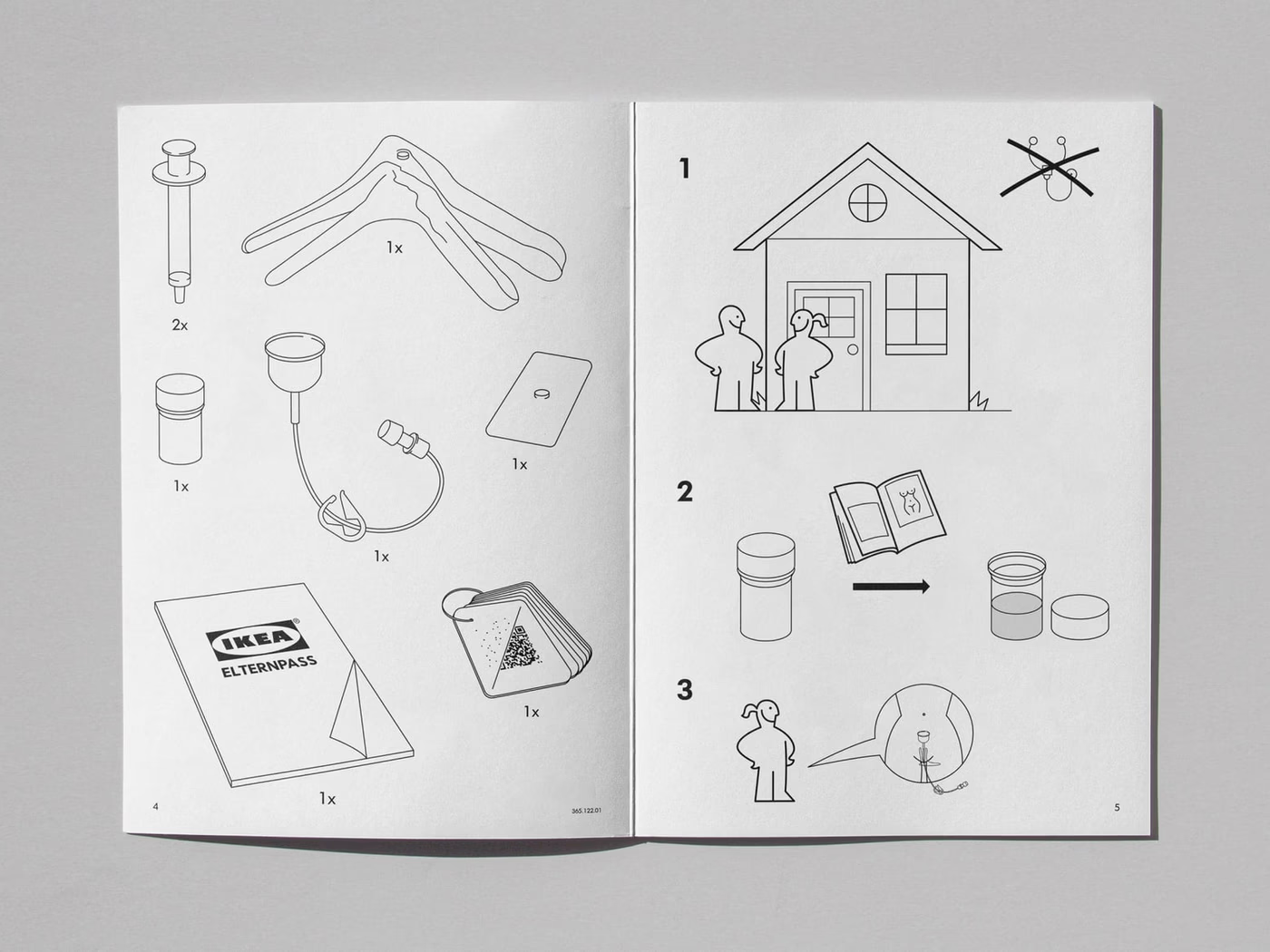
IKEA × AstraZeneca – Concept
Cross-brand concept: how would IKEA package a medical product? A conceptual brand experiment.
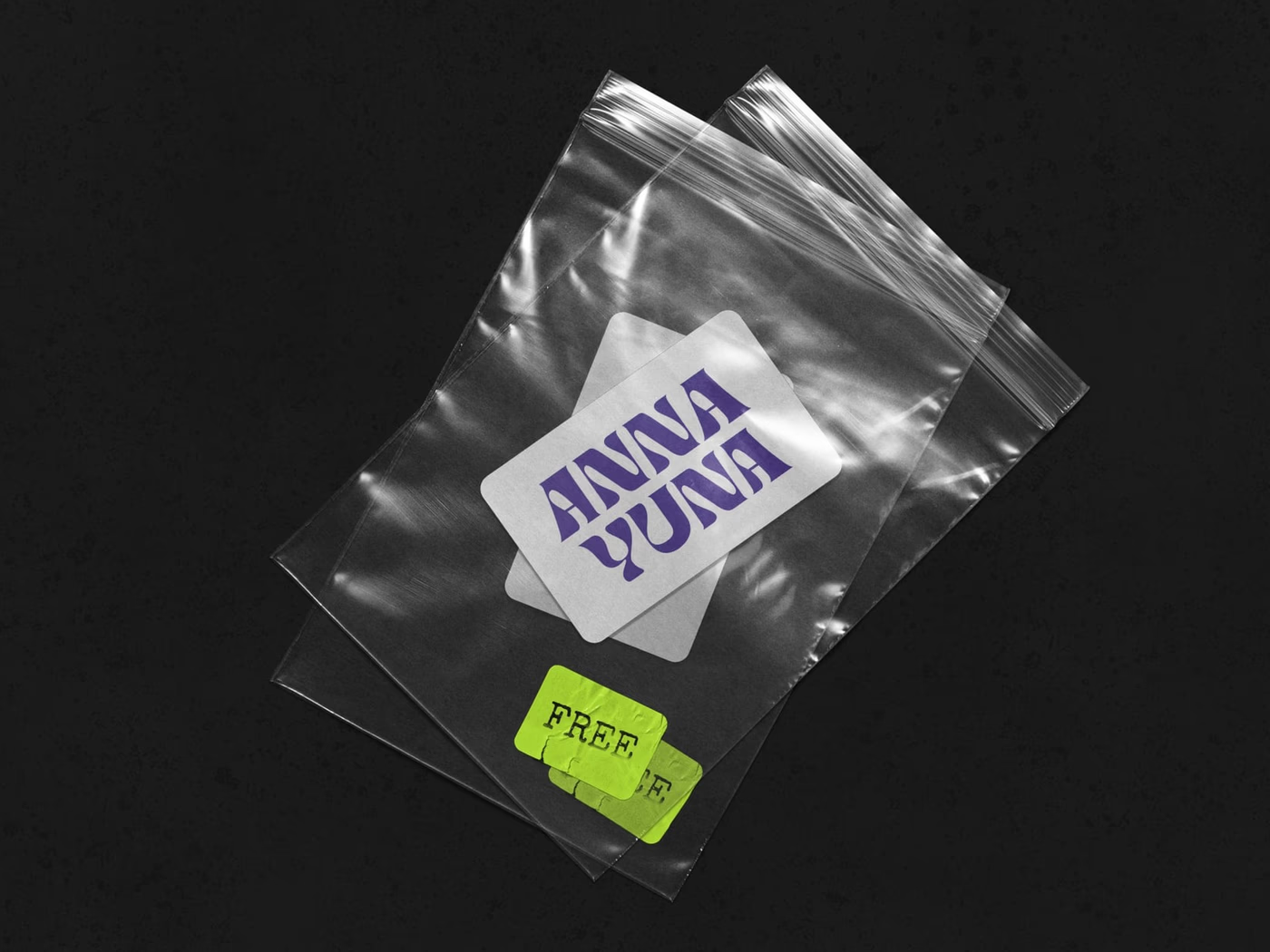
ANNA YUNA – Music Branding
A visual language that oscillates between neon light and moonlight — cover artwork and stage presence for a musician.
Frequently asked
A full book project with concept, type area, microtypography, cover, artwork and press supervision typically lands between €4,500 and €15,000. Photo books, catalogs or larger books over 300 pages start higher. Print costs and image fees are separate.
A typical book project needs 8 to 16 weeks from briefing to print release. Textbooks, photo books or anthologies with multiple authors take longer, often 16 to 24 weeks with several editorial and proofreading rounds.
The application decides. Thread binding with hardcover works for books that should lie open often (textbooks, cookbooks, photo books). Perfect binding with soft cover works for fiction and non-fiction. Swiss brochure with open spine is a beautiful solution for independent book projects where the book should also lie flat.
For body text we often work with natural papers like Munken Pure (warm-white, lightly textured) or Holmen Book Cream (for longer novels). Photo books usually demand coated paper like Magno Volume or a subtly matte art paper. The choice depends on image density and print technique.
Yes. Typesetting and artwork run fully remote. I attend press proofs on site on request, across Germany. For book projects with publishers we work in parallel with editing, proofreading and printing.
Start a project?
Tell me briefly what it is about — in a 30-minute first conversation we clarify whether and how we can work together.