Branding for Museums
A brand that holds between collection, education and wayfinding, from the poster through the audio guide to the timed-entry ticket. For museums and exhibition houses across Germany.
A museum rarely sells just a ticket. It sells an encounter, a mediation, a remembrance. It starts with the poster in the street, runs through the entry queue, the room booklet, the wall label, the audio guide, the school material and ends with the book in the shop. Anyone promising one world on the poster and showing a second, third, fourth one in the gallery loses the attention an exhibition needs from the very first second.
Where a museum brand actually wins
Most visitors decide in three seconds. Walking past the poster, scrolling through the website, lining up at the ticket counter. Only then does the actual experience inside the building begin, shaped by wayfinding, room text and wall label. A strong museum brand makes sure these stations refer to each other rather than contradicting each other. A temporary exhibition with a loud identity inside a house with a quiet collection presentation only works if both worlds visibly belong to the same institution.
In a museum landscape with over 6,700 houses across Germany, distinctiveness between institutions matters, consistency within one institution is decisive. So we open with a brand strategy, clarify the house architecture and voices between collection, temporary exhibition and education, and translate that into brand design, visual identity and an icon system for education.
What we actually deliver
A typical museum project covers the main brand and its sub-labels, a coherent signage system from façade to wall label, the poster and room booklet per exhibition, the catalogue raisonné and the accompanying collection or exhibition catalogue, education material at multiple reading levels, the layout basis for audio guide and app, the event branding for openings and the Long Night of Museums, and a lean web presence with ticketing integration and timed-entry logic. Concretely: we build the system once, you deliver the next three temporary exhibitions with clearly defined building blocks, without education suddenly looking like a club newsletter.
- 01
One identity, many voices
Main brand, collection strand, temporary exhibition, education line. We build a system in which sub-programmes recognisably belong to the mother brand, without each exhibition getting a fresh coat of paint.
- 02
Wayfinding as part of the brand
Signs, room texts and wall labels are not an appendix. They are the element visitors hold eye contact with longest. We design the signage as part of the visual identity, not as an afterthought.
- 03
Education that does not lecture
Family booklet, school material, audio guide layout, app screens. Education lives from tone, imagery and legibility. We build it so six-year-olds and senior teachers can leave the same room.
- 04
Built to carry across exhibitions
Collection display, temporary exhibition, changing format. The identity carries between programmes instead of starting each temporary exhibition with a world of its own that disappears after three months.
Selected work
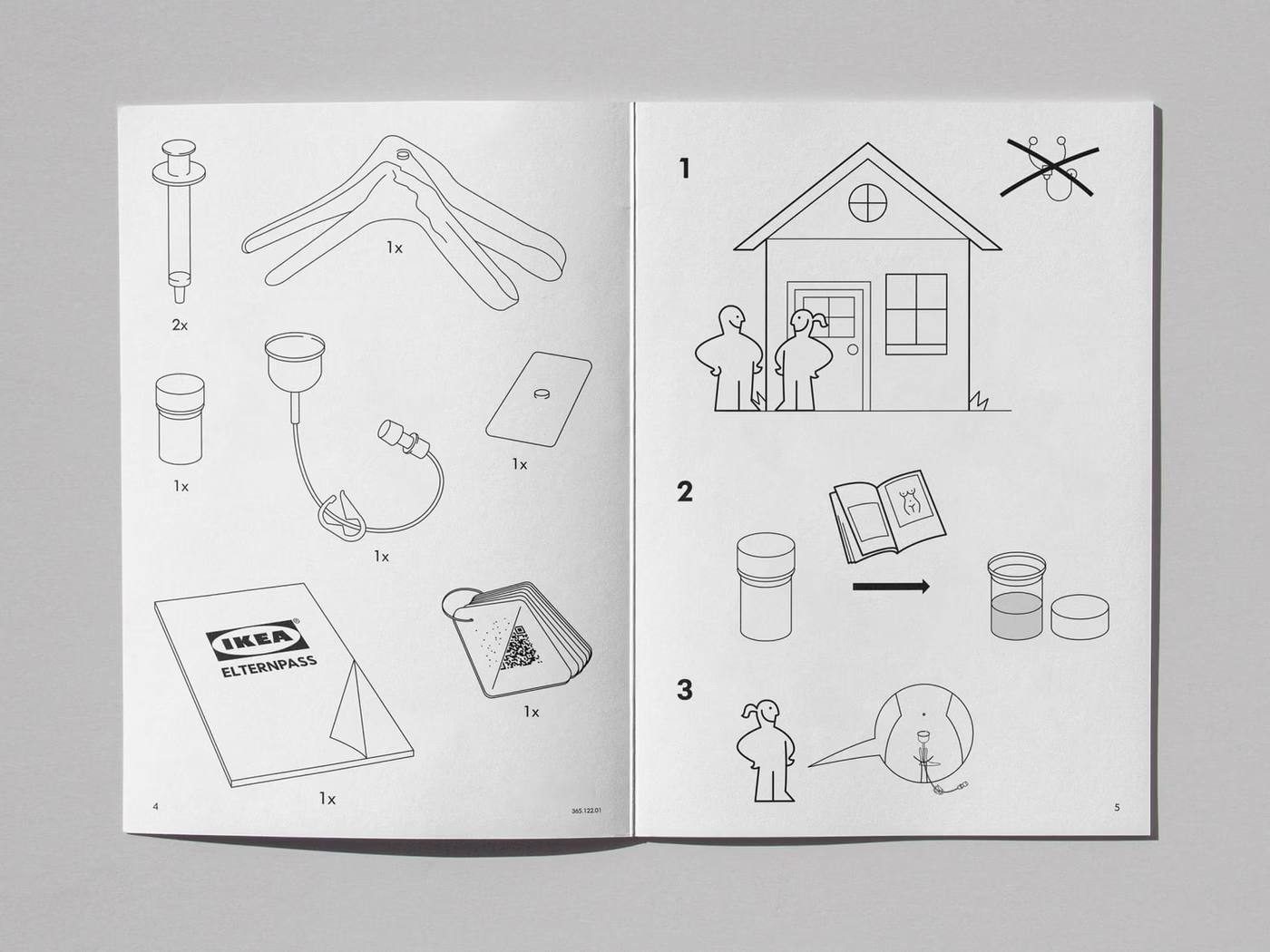
IKEA × AstraZeneca – Concept
Cross-brand concept: how would IKEA package a medical product? A conceptual brand experiment.
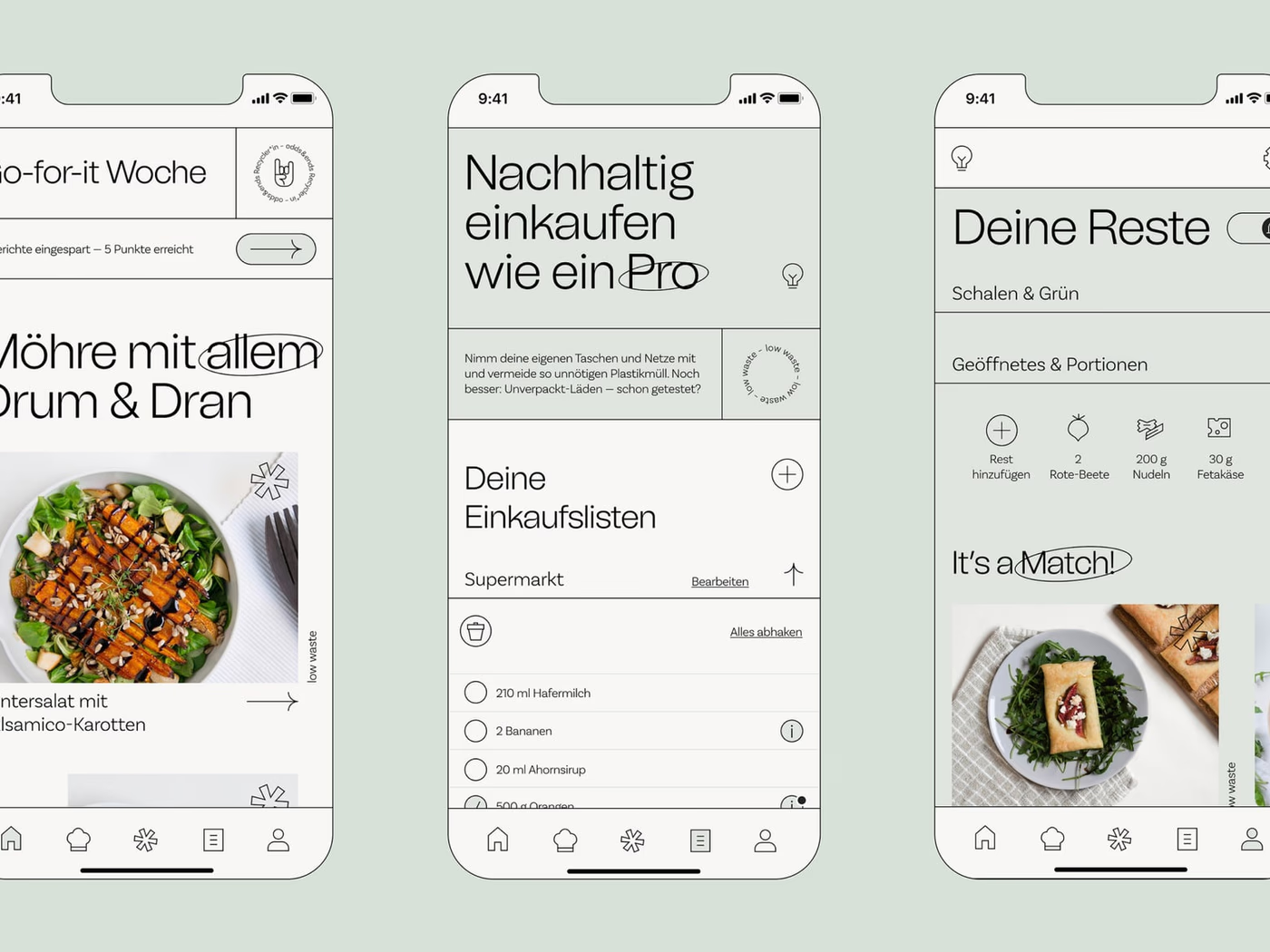
Odds & Ends – App Design
Cook leftovers instead of throwing them away — UI concept and brand world for an app against food waste.

Super Me – Mental Health Game
Pixel heroines, bold colours and a neon-pink tone — character and brand world for a mental health game.
Frequently asked
- What does branding for a museum cost?
- A museum branding with main brand, visual identity, signage foundation and education material typically lands between €12,000 and €40,000. We clarify the scope in a first conversation, depending on the size of the collection, the number of parallel exhibitions, the state of existing wayfinding, and whether a new website is part of the project.
- How long does a museum project take from briefing to opening?
- A full brand build with identity, signage and education line usually takes 12 to 24 weeks. A pure temporary exhibition identity is realistic in 6 to 10 weeks. When an opening date is fixed, we plan print, signs and web release backwards.
- Do you also handle wayfinding inside the building?
- Yes. We develop the [wayfinding system](/en/leistungen/raum-signage/wegeleitsystem) as part of the visual identity, from external signage through floor guidance to room numbers and wall labels. On request we work with signage workshops we have already realised projects with.
- What about the audio guide, app and digital education material?
- The layout of the audio guide interface, app screens and digital education stations runs in the same brand world as the printed material. That way there are no breaks between room booklet, display and room text.
- Do you work across Germany?
- Yes. Museums in every region of Germany are part of our normal project landscape, from state museums to Kunstvereine. Briefings, curator conversations and layout reviews run entirely remote. On-site visits for hanging tests, signage approval or openings are planned separately.
Start a project?
Tell me briefly what it is about — in a 30-minute first conversation we clarify whether and how we can work together.