Branding for Distilleries and Spirits
A brand that carries from bottle shape across the closure capsule to the ritual at the glass. For distilleries and spirits brands across Germany.
Distilleries rarely sell just spirits. Usually there is a craft behind it, a regional fruit, an evening at the end of a long day. Spirits live on rituals. And rituals need an object to carry them.
The bottle is that object. It is seen, lifted, opened, poured, closed again. Sometimes that happens daily for years. A brand that makes something of this act needs more than a beautiful label. It needs a clear sense of who the person at the other end of the glass is and what they are looking for in that moment.
Shelf decision in three seconds
Spirits are chosen on the shelf differently than wine. Wine runs on grape variety, region, vintage. Spirits run on the bottle itself. Form, glass colour, label position, closure. If you do not differentiate via the silhouette in the premium segment, you quickly end up next to thirty other gin bottles in the same perceptual category.
Strong brand work for distilleries therefore starts with one question: is the bottle shape part of the brand, or does the label have to do all the work? Both are possible. But the answer determines how the whole system is built.
According to Statista, the German premium spirits market has been growing for years. That raises the pressure on shelf presence and makes brand work for distilleries increasingly a strategic matter, not merely an aesthetic one. Clarifying brand positioning early avoids the most expensive question in hindsight: why should someone buy from us?
Material speaks before the contents are tasted
By the time you reach the label and closure capsule, materiality takes over. Hot foil stamping in copper for a fruit brandy. A cork with a wooden head for a whisky from barrel ageing. A wax seal for a single-cask edition. We choose every finishing with one concrete question in mind: what does the hand have to feel, and what disappears after the first opening anyway?
The sleeve and neck label are mandatory in the German market (Branntweinsteuer, ABV declaration, required labelling). But they are also surface area. Anyone who prints only the legal minimum there gives away a contact point with the brand. Treating them as a design element is an advantage over competitors who overlook that.
A folding carton or gift box enters the system when the spirit is sold in the premium or gift segment. In the standard range, sleeve and neck label are often enough. We decide that together in the strategy phase, depending on sales channel and price point, not as a blanket rule.
From pot still to London Dry Gin
Distilleries are not a homogeneous group. A craft distiller producing fruit brandy from an old farmhouse recipe needs a different brand language than a column still operation making vodka or rum for the mass market. And a craft gin manufactory with eleven botanicals and a juniper focus sits somewhere else again.
We work with small distilleries filling their first commercial batch as well as with established houses repositioning a range. An overview of the industry structure and economic situation is provided by the Bundesverband der Deutschen Spirituosen-Industrie und -Importeure, which also covers alcohol advertising guidelines and the standards of the Deutscher Werberat. Anyone planning label design for high-proof spirits should know these boundaries.
For smaller producers, the resources of the Kleinbrennerei association offer practical guidance on tax strips, excise law, and bottling requirements.
How a project typically runs
We start with a brand workshop where we clarify craft, region, range structure and price positioning. A distillery that has not yet decided between tradition and craft, between regional and national, rarely wins a clear position on the shelf. That is not a criticism, it is a starting point.
From there we develop logo and visual identity, the label system for one or several lines, the closure design, where needed sustainable packaging with plastic-free capsules and recycled-fibre board, plus a lean digital presence with shop integration.
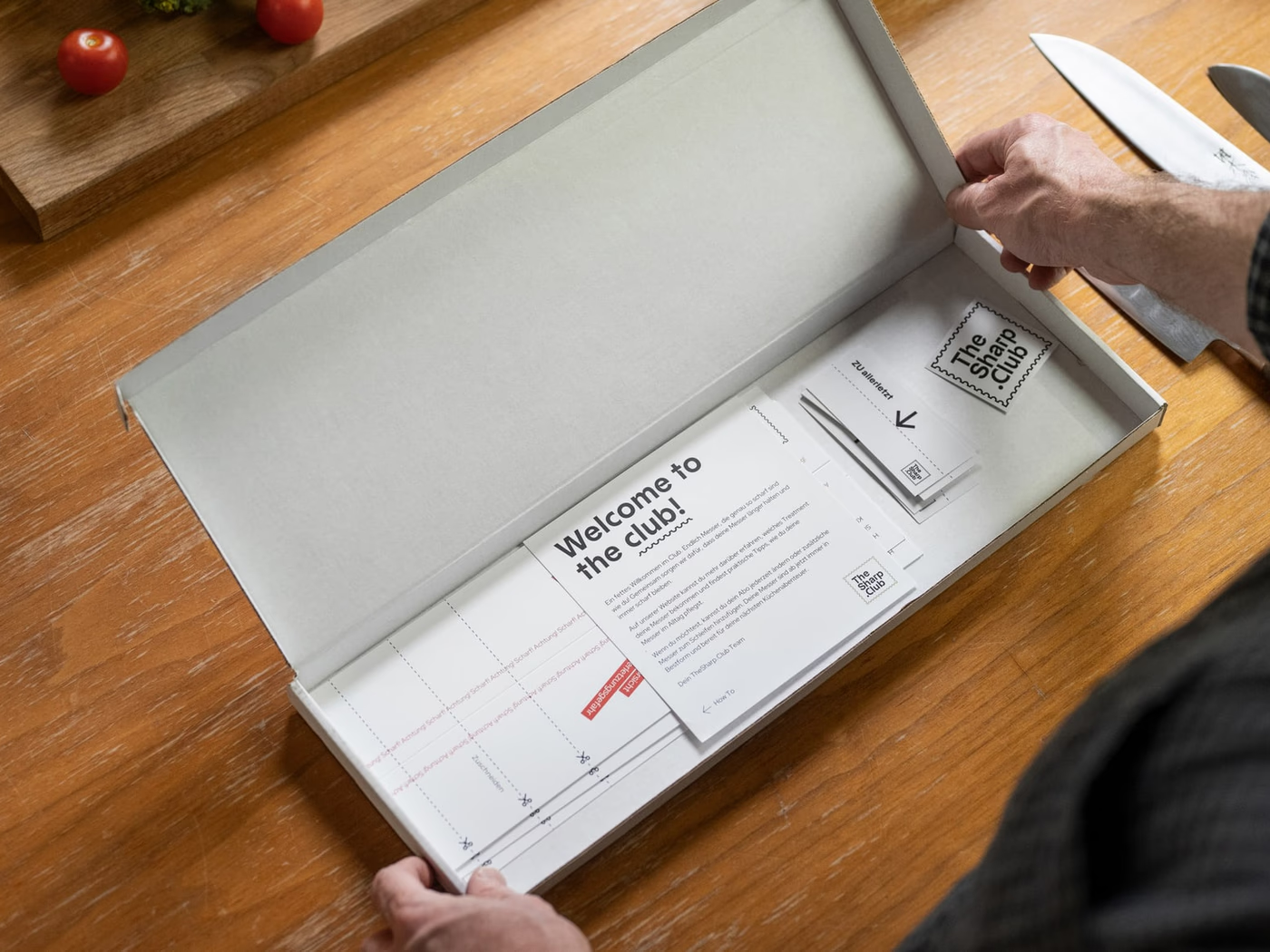
The TheSharp.Club project is a good example. There, a packaging line became the actual brand work. Weingut Werner shows how label design in the drinks segment can go far beyond mandatory information.
For those just starting out, the industry overview Drinks and Indulgence covers related areas such as breweries and wineries. Brand work follows similar principles across all these segments. But spirits have their own logic, their own materiality, their own ritual. That deserves its own approach.
Happy to answer questions personally. Write to me.
- 01
Bottle shape as the first accent
A gin, whisky or liqueur bottle is recognised by the silhouette first. We treat bottle shape and label as one unit in which the shape carries the label, not the other way around.
- 02
Closure capsule and stopper as brand details
Capsule, cork, heavy stopper, wax. The closure is the detail the hand feels and that remains after the first opening. We design it as a brand carrier, not a functional part.
- 03
Finishing with intent, not effect
Hot foil stamping, blind embossing, structured varnish, natural paper, screen print directly on glass. We pick finishings that support the promise of the spirit and avoid the collector effect of an early design draft.
- 04
Ritual at the glass thought through
Spirits are drunk in rituals. Gin and tonic with garnish, whisky with two drops of water, liqueur neat. We design box, insert and accompanying cards so the ritual travels, not just a logo on the bottle.

Frequently asked
- What does branding for a distillery or spirits brand cost?
- A complete branding with logo, visual identity, label system for one line, closure capsule design and folding carton typically lands between €6,000 and €22,000. We clarify the scope in a first conversation, depending on the number of varieties, the depth of finishing and whether a custom bottle shape exists.
- How long does the project take through the first bottle on the shelf?
- A brand build for a spirits brand usually takes 8 to 14 weeks. Finishing, proofing and capsule production have their own lead times, which we plan in so the launch does not hinge on one supplier.
- Can we start with a stock bottle and switch to a custom shape later?
- Yes, and that is actually common. Many distilleries start with a stock bottle and develop a custom shape with the second range. We build the label system so it fits both bottle shapes, without the brand breaking on the form change.
- How meaningful is a dedicated box per bottle?
- A folding carton or box per bottle makes sense when the spirit is sold in the premium or gift segment. In the standard range, sleeve and neck label are often enough. We decide this together in the strategy phase, depending on sales channel and price point.
- Do you work across Germany?
- Yes. Distilleries and spirits brands from every region of Germany are part of the normal project portfolio, from fruit distilleries in the south to gin distilleries on the coast. Briefings, workshops and proofs run entirely remote; on-site visits for distillery tours or tastings are planned separately.
Start a project?
Tell me briefly what it is about — in a 30-minute first conversation we clarify whether and how we can work together.