Branding for Sustainable Fashion Brands
A brand that holds between GOTS, Fairtrade, Bluesign, Cradle to Cradle, repair service and take-back, without turning the front into a wall of seals. For sustainable fashion brands across Germany.
A sustainable fashion brand rarely sells a single garment alone. It sells a supply chain that stays traceable, a repair that still works years later, a return that keeps the piece out of landfill. For a first purchase to become a second and a second to become a regular who brings their clothes back, it takes more than a pretty logo. It takes a brand that tells the same story at every touchpoint, from the GOTS hangtag to the repair card in the carton.
Where sustainable fashion branding actually wins
Most sustainable fashion brands are discovered through the supply chain story, then tested through the first garment, then judged through the repair or take-back experience. Strong brand work does not invert this order, but it ensures every station honours the next promise. Someone who reads Cradle to Cradle on the website and finds a PE plastic logistics label in the carton will buy elsewhere next time. Someone handed a repair card that is easy to fill in stays.
In a market where greenwashing has become a standard legal claim and where competition law strictly checks environmental claims, the question is not whether sustainability is shown, it is how. So we do not start with a mood card. We start with the question: what needs to be the same on the hangtag, in the inside label, in the lookbook, on the repair card and in the online shop? A brand strategy clarifies stance before design begins.
What we actually deliver
A typical project for a sustainable fashion brand covers visual identity with logo, type, colour and imagery, a hangtag family with a fixed zone for seals like GOTS or Fairtrade, an inside label with material note and recycling guidance, a lookbook joining supply chain and collection, a sustainability report as a quiet trust document, a repair and take-back card with clear instructions, a poster for pop-up or wholesale window, a sustainable packaging concept and a lean online presence. We start from a clarified brief, so design rests on a stance.
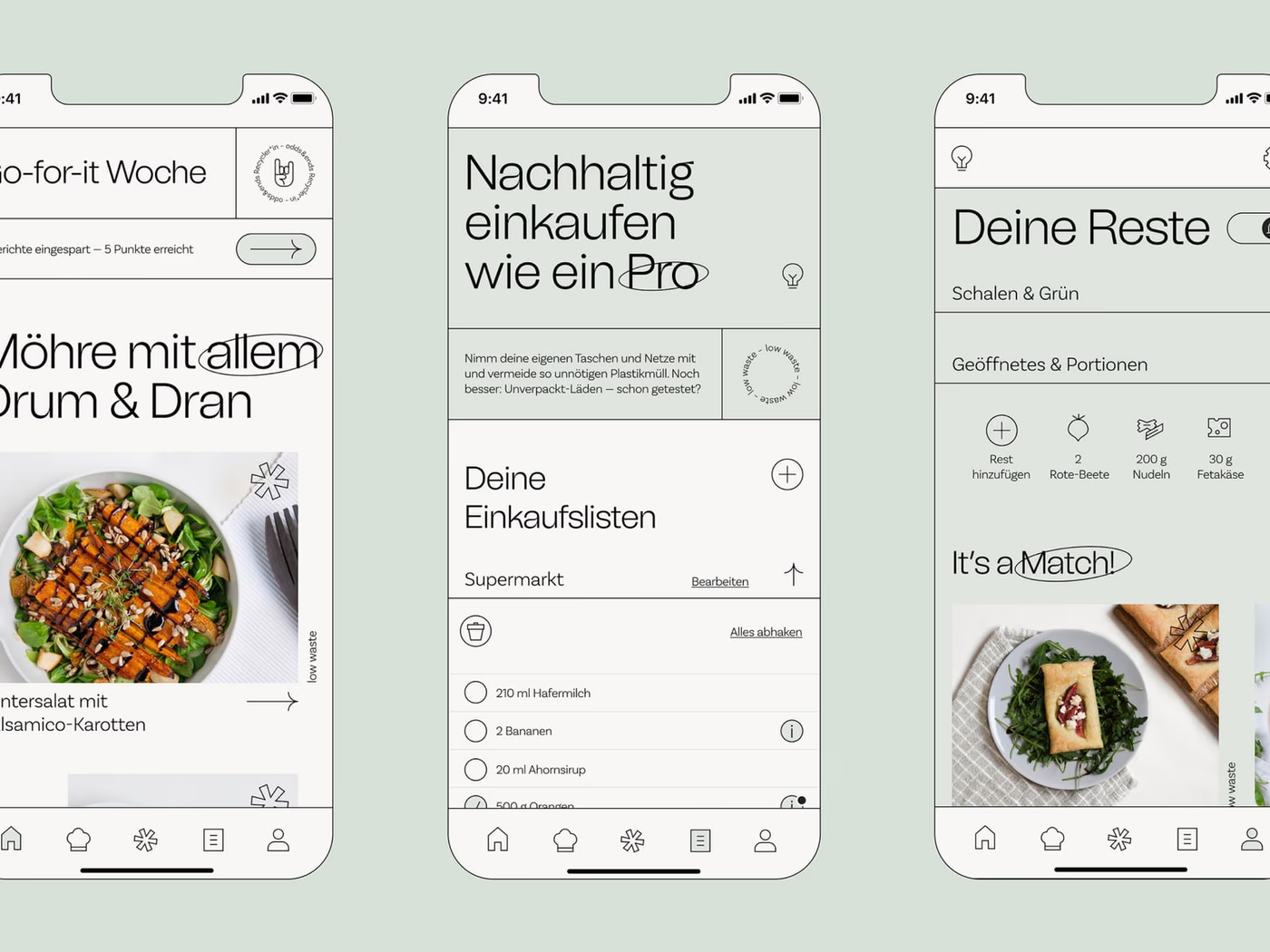
Concretely, we build a label layout where seals get fixed zones, where the material list stays legible, and where the repair card works as a small print piece on its own. Comparable care in the sustainability and fashion context is visible in our work for Odds & Ends and Velvet Soul Street.
- 01
Seals as part of the system, not as stickers
GOTS, Fairtrade, Bluesign and Cradle to Cradle get fixed zones in the layout instead of wandering across every application. Trust comes from clarity, not from noise.
- 02
A supply chain that becomes traceable
Lookbook, online shop, hangtag and repair card tell the same supply chain with the same language. We build a system where origin is visible without every dress needing a bachelor thesis on cotton.
- 03
Repair and take-back as brand surfaces
Repair service and take-back programme are not service footnotes, they are part of the brand. We design cards, labels and communication so return and repair are legible as promises.
- 04
Built to grow
A new collection, a collab with a certification initiative, an Earth Day pop-up, a wholesale launch. The identity carries through instead of being reinvented with every new focus.

Frequently asked
- What does branding for a sustainable fashion brand cost?
- A complete brand package with logo, visual identity, hangtag, inside label, lookbook, repair and take-back cards and an online presence typically lands between €6,000 and €18,000. We clarify scope in a first conversation, depending on range size, certification logic and number of supply chain partners.
- How long does the project take?
- A full brand build usually takes 10 to 14 weeks. A pure lookbook and hangtag refresh for an existing brand is realistic in 5 to 7 weeks. Proofing and supply chain documentation are planned in so the launch does not tip in the last week.
- How do you handle seals like GOTS, Fairtrade, Bluesign or Cradle to Cradle?
- We build a layout where seals get fixed zones instead of being scattered. Which seal fits which application is clarified together with your certification body and with an eye on relevant German competition law, so environmental claims stay legally sound.
- Is take-back run as its own brand?
- We design take-back as a visible sub-programme of the brand, not as a second brand. Own card, own zone on the label, own section in the online shop, but the same image language. Take-back stays credible and does not read like a marketing stunt.
- Do you handle the sustainability report?
- Yes. We design the [sustainability report](/en/leistungen/editorial/nachhaltigkeitsbericht) as a quiet, readable print piece or a digital counterpart. It does not carry the full CSRD reporting, but serves as an accessible trust document for end customers and wholesale.
- Do you work across Germany?
- Yes. Sustainable fashion brands in every region of Germany are a normal part of the project landscape. Briefings, workshops and proofs run entirely remote. On-site visits to the atelier or take-back logistics partner can be planned separately.
Start a project?
Tell me briefly what it is about — in a 30-minute first conversation we clarify whether and how we can work together.