Sustainability Report Design
With the Corporate Sustainability Reporting Directive, the sustainability report has moved into a different league. What used to sit as a voluntary CSR report in the communications department is now audit-required, ESRS-compliant and in many companies as extensive as the classic annual report. That changes what design has to deliver. Concretely, we build reports that work as compliance documents and at the same time read as strategic statements.
ESRS, materiality and the design task
A CSRD-mandatory report follows the European Sustainability Reporting Standards (ESRS), split into twelve standards: two cross-cutting (ESRS 1, 2) and ten topical ones on environment, social and governance. Each standard contains dozens of data points that must be audited. The central preparation is the double materiality analysis: which sustainability topics are material from the company's and from stakeholders' perspectives. Only after that is decided which data points get reported and at what depth.
From a design perspective: we work with the sustainability team on a structure that secures ESRS compliance and at the same time carries the narrative arc. Mandatory tables, data point markings and cross-references to the materiality analysis are set so the audit runs cleanly and the report stays readable. For annual reports that appear in parallel, we coordinate the visual language so both documents are recognisably part of the same brand.
Data that proves, not decorates
The data section of a sustainability report is more demanding than that of an annual report because it is heterogeneous. CO2 emissions in scope 1, 2 and 3, water consumption, material flows, employee structures, supply chain transparency, governance KPIs. We develop a data visualisation that separates these themes cleanly and keeps them comparable. An emission path with a reduction target needs a different visualisation from a share diagram for gender distribution on the supervisory board. Concretely, for every KPI we choose the form that supports the statement, and skip diagram folklore.
In production, the report follows its own statement. Recycled paper (e.g. Circle Offset Premium White), mineral-oil-free inks, FSC certification, climate-compensated production, short transport routes. On request we manage printer selection and on-press attendance. For many reports an online version emerges in parallel as an interactive PDF or microsite with ESRS filter, so investors and analysts can access individual data points directly. What we do not do: greenwashing gloss with nature photography and no data spine. A report is evidence, not an image brochure.
CSRD and ESRS requirements handled reliably
We know the demands of the Corporate Sustainability Reporting Directive and work with materiality analysis, ESRS data points and double materiality so artwork does not stumble.
GRI and CSR reports that do not read like compliance
Reports based on GRI Standards, DNK or classic CSR formats also need a narrative arc. We carve out the strategic points and order the data load.
Data visualisation that proves, not decorates
KPIs, emission paths, supply chains and material flows get visualised so the statement holds. No diagram folklore, no 3D pie charts.
Print and material with a stance
Recycled paper, mineral-oil-free inks, FSC certification, climate-compensated production. We choose material and printer so the report keeps its promises.
Selected work
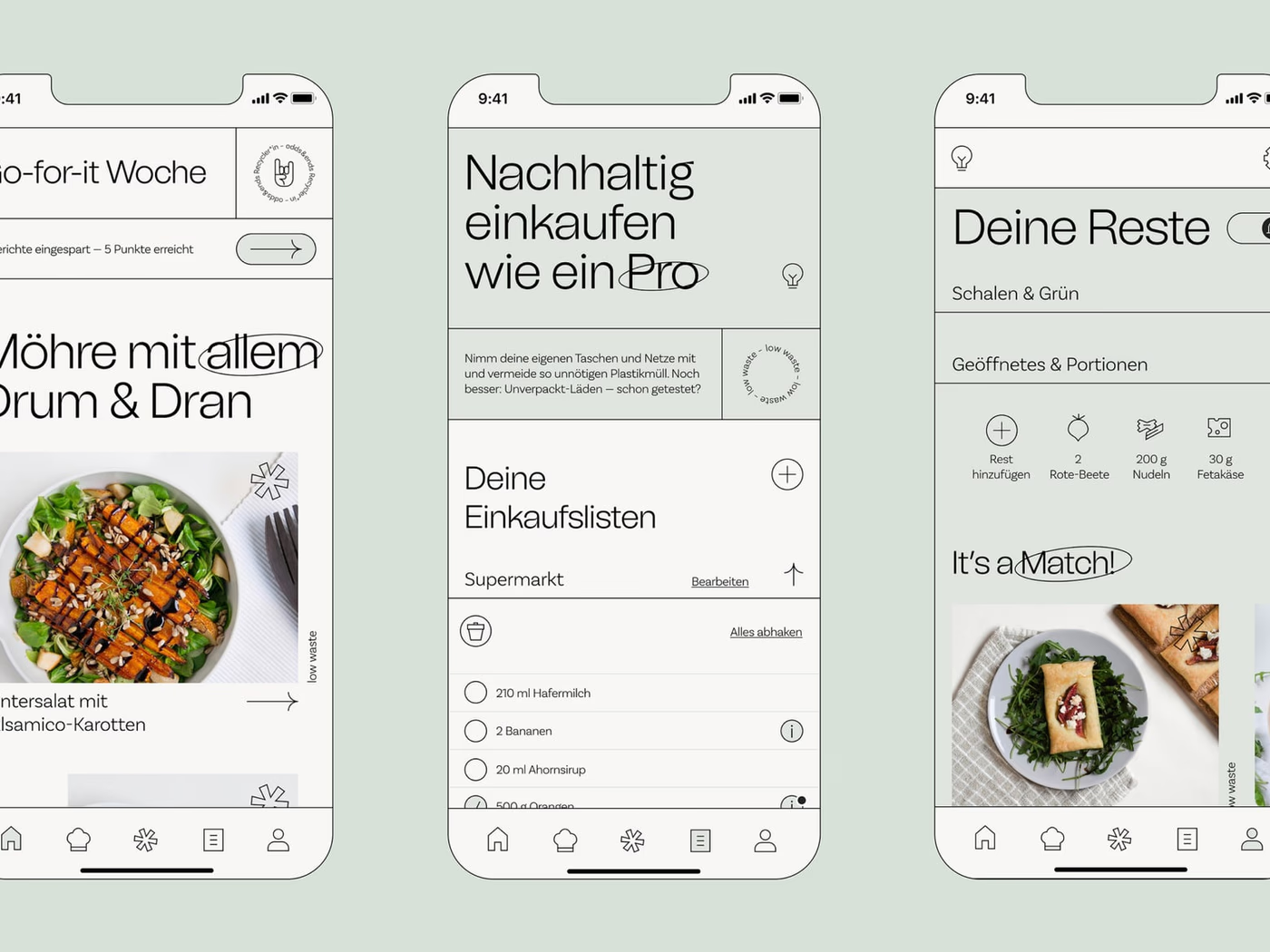
Odds & Ends – App Design
Cook leftovers instead of throwing them away — UI concept and brand world for an app against food waste.
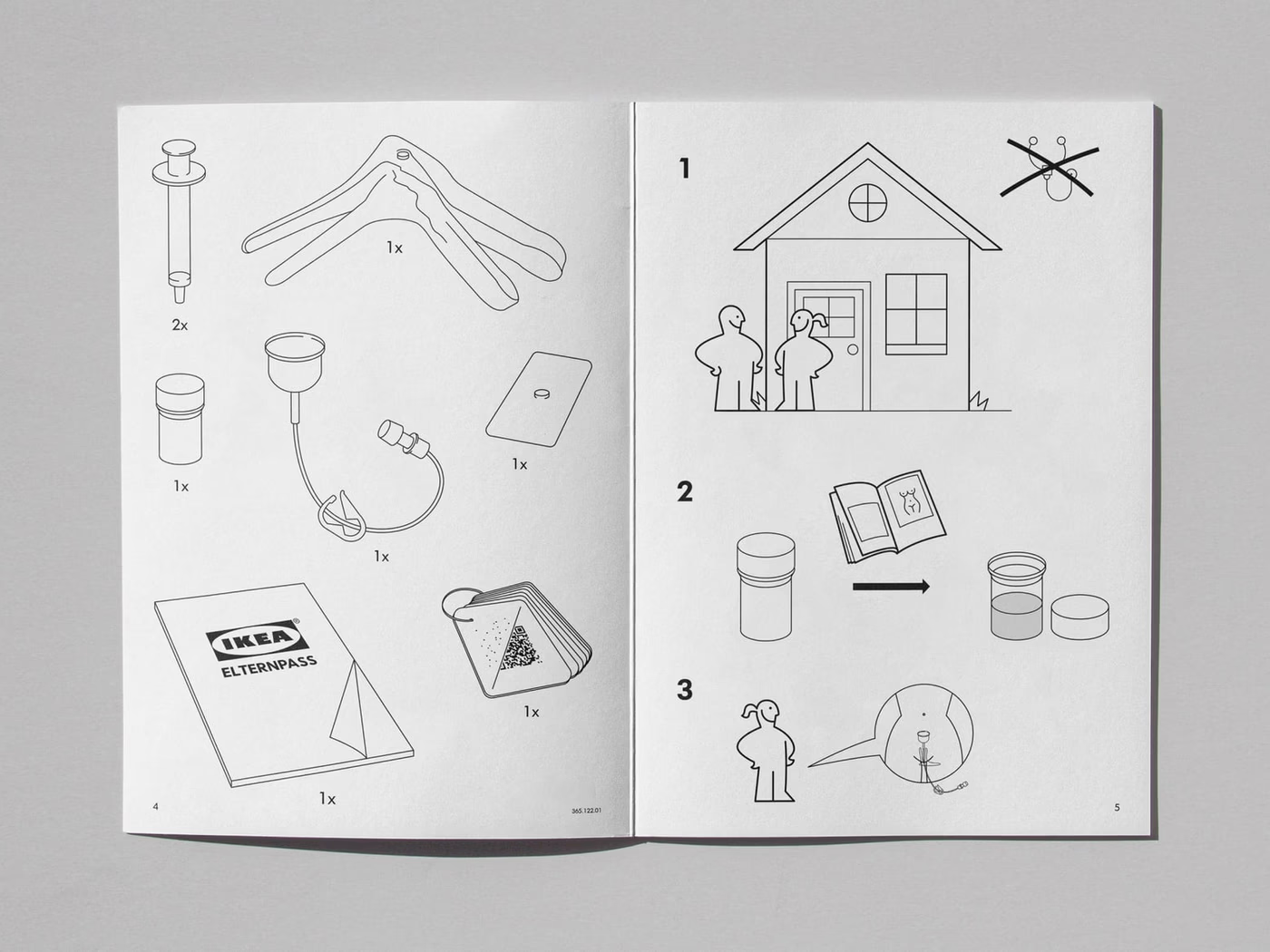
IKEA × AstraZeneca – Concept
Cross-brand concept: how would IKEA package a medical product? A conceptual brand experiment.

Finanzguru – Brand Design
A fintech brand that works inside a subway tunnel: campaigns, iconography and tone of voice for Finanzguru.
Frequently asked
A full report with concept, editorial design, data visualisation, ESRS-compliant structuring and artwork typically lands between €10,000 and €40,000. We finalise the scope by report extent (CSRD-mandatory or voluntary), number of ESRS data points, language versions and production (print, online PDF, HTML report).
We work with CSRD/ESRS for reporting-obligated companies (staged from 2024), GRI Standards for international comparability, DNK for mid-size German companies and classic CSR formats for voluntary reports. The choice gets clarified with sustainability, audit and communications.
12 to 20 weeks from briefing to print release is realistic, depending on the complexity of the materiality analysis, the number of ESRS data points and stakeholder interviews. For first-time CSRD-mandatory reports the window often extends, because internal data structures still need to emerge.
Since CSRD, limited assurance by an auditor is required. We work closely with the auditing bodies so data points, cross-references and pagination remain audit-proof through the artwork phase.
Yes. Concept, artwork and press supervision run fully remote. On request we attend materiality workshops or press proofs on site, across Germany.
Start a project?
Tell me briefly what it is about — in a 30-minute first conversation we clarify whether and how we can work together.