Branding for SaaS and Software
A brand that stays consistent from the app icon in the dock through the onboarding flow to the documentation hub and turns free trials into paying customers. For SaaS companies across Germany.
A SaaS product rarely sells a feature. It sells the promise that a task gets lighter, that a team ships faster, that a process finally stops living in someone's head. For a trial signup to become a paying account, the brand has to hold the same promise at every touchpoint, from the app icon in the dock to the empty state of a fresh workspace.
Where SaaS branding actually wins
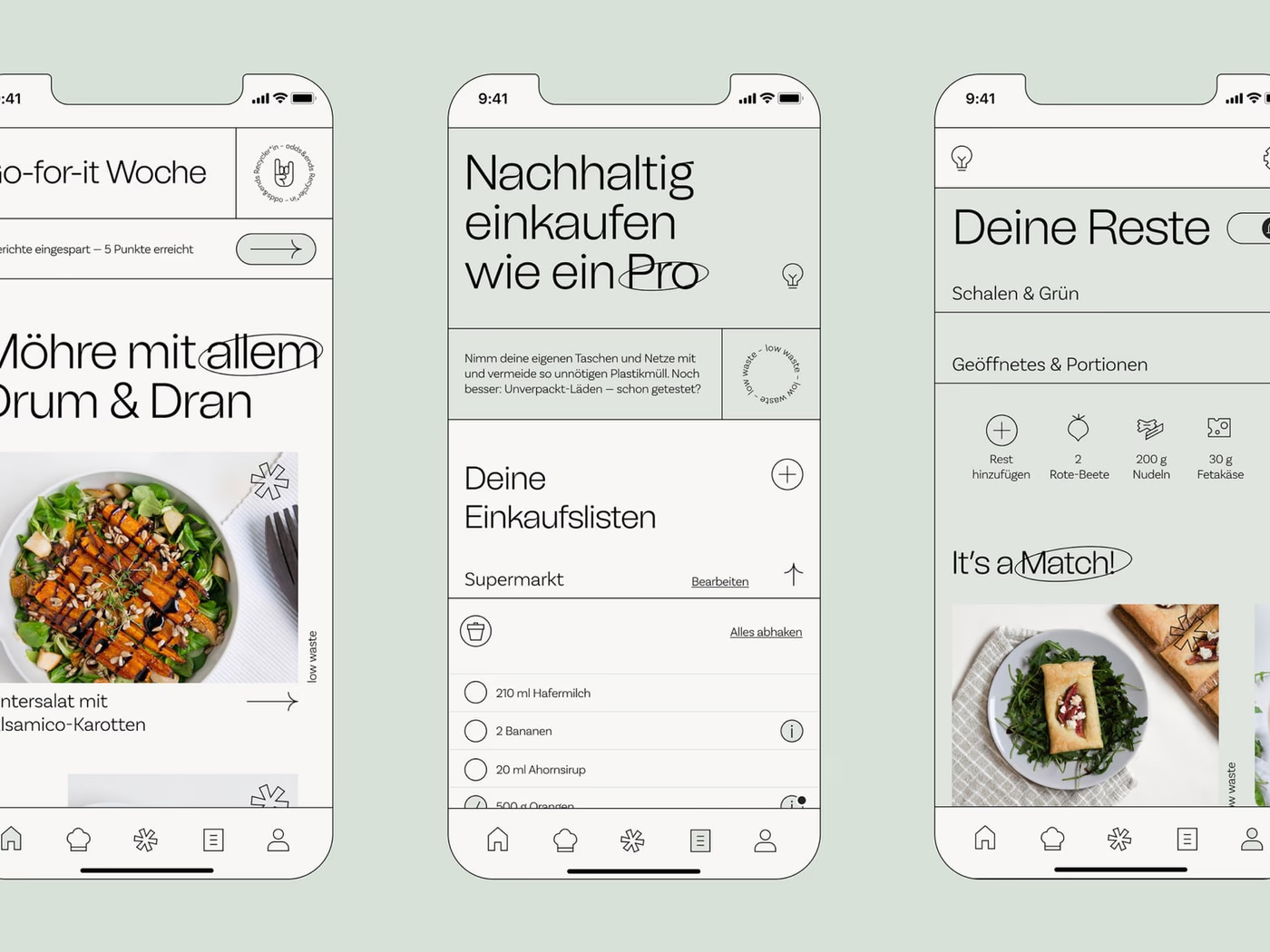
Most software purchase decisions are not made on the landing page, they are made in the first trial. A good hero earns the click on "start free", but the first seven minutes in the product decide whether that becomes a long-term customer or a dormant seat. Onboarding, empty states, the first in-app notifications, the confirmation email after activation, all of it is brand work, even if the marketing backlog rarely calls it that.
In a market where every category has ten similar tools, distinctiveness is not a style topic, it is a conversion question. So we do not start brands from a Pinterest board, we start from the question of what needs to be the same on the marketing site, in the trial funnel, in the documentation and in the Slack bot notification. We set this frame in a brand workshop before the first sketches of an app icon.
What we actually deliver
A typical SaaS branding project covers brand strategy, logo design and an app icon that stays readable at sixteen pixels, the full visual identity with colour system, typography and an icon language, the marketing site including landing pages for the trial funnel, and a component layer for the product UI that stays realistic with the engineering team. On top come the brand pieces that surface in every second SaaS phase: a well-kept changelog, a readable documentation hub, templates for in-app notifications, a sales deck for enterprise.
We like to work with teams who take their product seriously and do not treat design as wallpaper. When the product is clear, the brand becomes clear. When the product is still searching, we talk about brand positioning before any design, so the branding does not promise something the product cannot keep.
- 01
Marketing site and product speak one language
The marketing hero must not contradict the first screen after login. We build an identity that carries both worlds, from the pricing page to the empty state.
- 02
Onboarding is design, not onboarding copy
The first seven minutes decide activation. We shape the flow as a visible promise, with empty states, in-app tooltips and aha moments in the right place.
- 03
Changelog and docs as brand surfaces
A well-kept changelog and a readable documentation hub are not chores, they are trust anchors for technical buyers. Both become part of the system, not bolted-on extras.
- 04
An app icon that survives the sidebar jungle
Between forty other tabs and ninety Slack channels, the icon has to remain recognisable at sixteen pixels. We build brands that work small, not only in the pitch deck.

Frequently asked
- What does a SaaS branding cost?
- A complete branding with logo, visual identity, app icon, UI component language and a marketing site typically lands between €6,000 and €22,000. We clarify the scope in a first conversation, depending on product maturity, the number of marketing surfaces and whether a design system already exists in code.
- How long does a SaaS branding project take?
- A full brand build usually takes 8 to 12 weeks. If you only need an app icon, a marketing site and a first component set, 5 to 7 weeks is realistic. The onboarding flow is planned together with the product team so design and engineering do not work out of phase.
- Do you deliver a design system or only the brand?
- Both, in measured doses. A token set (colour, typography, spacing, icon language) and the most important UI components are part of the branding package. A full component system with every edge case is its own project and is scoped separately.
- Do you work with our engineering team?
- Yes, that is the normal case. We deliver designs in Figma, document tokens readably for developers and check with the frontend what stays realistic. No mockups that never reach the code.
- Do you work across Germany?
- Yes. SaaS companies from every region of Germany are a normal part of the project landscape, from Hamburg to Munich, from Cologne to Leipzig. Briefings, workshops, reviews and handovers run entirely remote via Figma, Loom and video calls.
Start a project?
Tell me briefly what it is about — in a 30-minute first conversation we clarify whether and how we can work together.