Branding for Lemonades and Soft Drinks
A brand that holds from the 0.33 litre tile in the kiosk fridge across the sleeve label to the crowler in wholesale. For lemonades and soft drinks across Germany.
A lemonade rarely sells just flavour. It sells a midday gesture, a non-alcoholic aperitif, an alternative to Coke or Sprite that should not taste industrial. And in a fridge where ten brands sit in a tile row, the choice is made in two seconds. If your 0.33 litre bottle is not immediately readable as a flavour, it gets overlooked. Even if the recipe behind it is the best for miles around.
Where the craft segment is growing
The market for lemonades, Schorle, mate, kombucha and kefir drinks has been growing for years. According to Statista, revenue from craft lemonades and premium soft drinks in Germany is rising steadily, while classic returnable Brause loses ground. Small bottlers and start-ups are bringing products to retail that hold up on quality but often fail on shelf. The reason is almost always the same: no coherent label design, no colour system that distinguishes flavours, no brand presence that carries beyond the kiosk fridge.
Organic lemonade on FSC recycled card with hot foil stamping, natural cork instead of pop-cap, stevia-sweetened soda with a shrink sleeve. These are not niches anymore. But each requires a different packaging promise. Copying the sleeve from the natural Brause does not signal premium quality, it signals confusion.
At the kiosk, the corner shop, the bar
The sleeve or paper label is the starting point, not the finish. We think the brand system from the shelf moment: what does someone walking past the fridge see? Which colour makes elderflower distinguishable from rhubarb without the palette falling apart? How does the GS1 EAN area sit without disrupting the design?
For the gastronomy channel, a second layer comes in. Crowlers for draft service, glass logo, menu. If you are listed in restaurants and bars, you need branding that does not disappear as an anonymous "organic soda" on the drinks list. We plan that from the start as soon as a brand enters gastronomy. And the label for the returnable bottle needs to be designed together with the sleeve for retail, so the brand image does not fall apart when the format changes.
Registration and packaging licensing is its own topic. Anyone bringing lemonade to the German market must register their packaging with the LUCID packaging register and apply for a GS1 base number for EAN codes via GS1 Germany. That is not design work, but it belongs to the market launch. We coordinate these points in the project timeline.
What a typical project covers
Every brand is different. But a typical lemonade or soft drink project has the same basic structure: brand design with logo and visual identity, the label or sleeve system for 0.33 and 0.5 litre bottles, the multipack carton for 6-pack or 12-pack units, gastronomy applications and a lean digital presence. Brands producing ecologically and prioritising sustainable packaging get a system built around returnable glass with paper labels instead of shrink sleeves, and recycled-fibre card instead of virgin fibre. That is not automatically more expensive. But it needs an early decision.
We usually start with a brand workshop where we clarify market position (organic, premium, craft, mainstream), sales focus (retail, gastronomy, direct), flavour structure and target audience. A lemonade that wants to appear simultaneously in the organic market, the corner shop and the bar rarely wins one of the three segments fully. Answering that positioning question early is design work, not marketing theory.
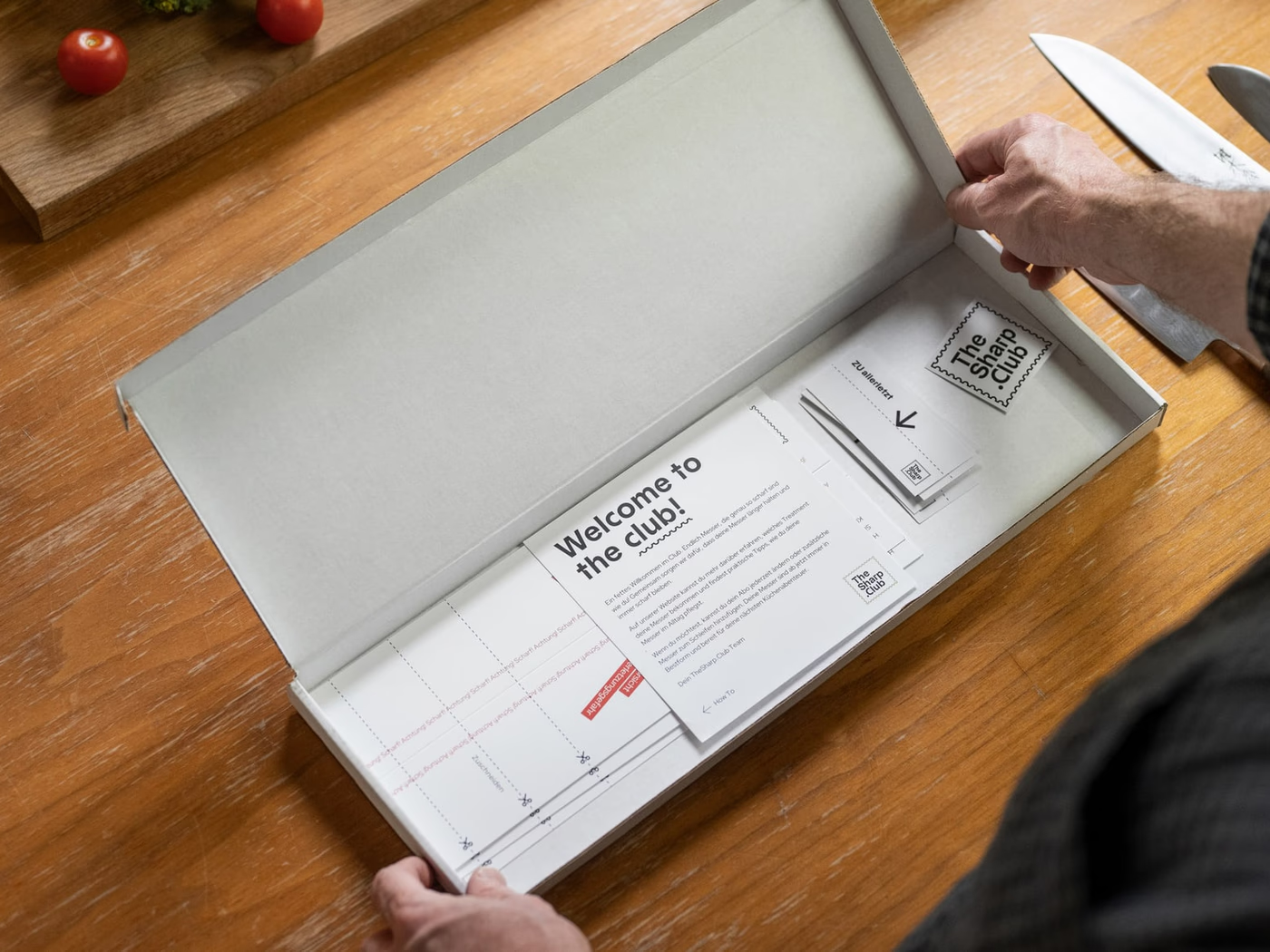
For a first impression of related projects, the packaging case study TheSharp.Club on our references page gives a good orientation. A short message via the contact page is enough to start a conversation.
Further brands from the drinks world include Weingut Werner and in industry context the pages for coffee roasteries and distilleries and spirits. What matters fundamentally in label design is covered in our blog post on wine label design, and the same principles apply to lemonade.
- 01
Readable in the fridge tile in 2 seconds
A lemonade is chosen in the kiosk fridge between water, beer and cola. We design label and sleeve so flavour, variety and brand are clear in two seconds, from the front and from the side.
- 02
Sleeve or label, with a system
Shrink sleeve wraps the bottle completely and offers more design surface. Classic label is cheaper, more compostable and fits natural lemonades better. We decide in the brief what fits the brand, instead of picking one out of habit.
- 03
0.33 and 0.5 side by side
A lemonade sells in both sizes, 0.33 for single sales, 0.5 for gastronomy and multipacks. We build the label system so both formats share the same accent and the flavour stays unmistakable.
- 04
Flavour as a colour code
Elderflower, rhubarb, lemon, ginger. Every flavour needs a recognisable colour without the system looking like a rainbow. We build a palette in which each flavour has its place and the returnable crate does not fall apart visually.

Frequently asked
- What does branding for a lemonade or soft drink brand cost?
- A complete branding with logo, visual identity, label or sleeve system for 0.33 litre and 0.5 litre bottles, multipack carrier and a digital presence typically lands between €4,500 and €14,000. We clarify the scope in a first conversation, depending on the number of flavours and the sales channel.
- How long does the project take through the first bottle in the fridge?
- A brand build for a lemonade brand usually takes 6 to 10 weeks. Sleeve production and label printing have lead times of 3 to 5 weeks, which we plan in parallel to the design work.
- Sleeve or classic label, what fits us?
- If you are making a modern, design-led lemonade, the sleeve gives you more design surface and stronger shelf impact in the tile. If you go for natural character and recyclability, a classic label on a returnable bottle is often the better choice. We decide this in the strategy phase, depending on brand tone and channel.
- How does it work with returnable bottles and crowlers for the trade?
- Returnable systems are still standard in the German market via beverage markets. We design the brand so returnable label, returnable carrier and gastronomy crowler (large can for draft) sit in the same system, without the brand dissolving on a format change.
- Do you work across Germany?
- Yes. Lemonade and soft drink brands from every region of Germany are part of the normal project portfolio, from organic lemonades in the south to modern soda brands in the north. Briefings, workshops and proofs run entirely remote; on-site visits for bottler support or product shoots are planned separately.
Start a project?
Tell me briefly what it is about — in a 30-minute first conversation we clarify whether and how we can work together.