Branding for Social Enterprises
A brand that holds between impact report and sales deck, from stakeholder briefing through stationery to donation landing page. For social enterprises across Germany.
A social enterprise is a double narrative. It sells a product or a service and uses it to fund impact. That doubling makes the brand demanding because it has to carry two arguments at once, without one obscuring the other. For a good idea to become an investable, credible company, you need a design that shows the same substance between impact report and sales deck, in different languages.
What social enterprise branding has to do
A social enterprise's stakeholders are mixed. Investors want market size and scalability. Funders want impact evidence. Customers want a good product. The team wants meaning that does not just sit on the wall. A strong brand positioning orders these expectations without collapsing them into one.
In a field where impact washing has become a real market risk, substance is the only long-term brand strategy. So we build the brand from the data that can be backed, not from impact rhetoric. A strong visual identity makes sure business figures and impact figures come from the same graphic world and therefore carry together as credibility.
What we actually deliver
A typical social enterprise project covers the visual identity (logo, type, colour, imagery, typography for long reading), the impact report with impact data and balance, the sales deck for B2B or investor sales, the pitch deck for funding rounds, the stakeholder briefing as a clarifying common ground, a honestly designed website and the stationery. We open with a brand workshop, in which the two narratives (business and impact) are sorted apart and at the same time made interoperable.
How we approach a social enterprise project
We go through the current pitch material once, through the last impact report (if any) once, and through the existing website once. Where does the brand carry, where does it break between investor room and impact context? Which figures stand reliably, which feel more like claims? Only then does design begin. We like to work with social enterprises that measure impact rather than just narrate it. When the substance is clear, the brand is clear.
- 01
Mission and business in one brand
A social enterprise sells a product or a service and uses it to fund impact. We build a brand that carries both without mission appearing as advertising or business as denial.
- 02
An impact report that is investable
An impact report is read at the same time by funders, investors and the team. We design it so impact data, balance and story flow into one reading.
- 03
A sales deck with substance instead of polish
A sales deck for a social enterprise has to deliver hard numbers and at the same time carry the impact story. We build it so both arguments can sit next to each other in one pitch.
- 04
A stakeholder briefing built for the complexity
Social enterprises usually have three to five stakeholder groups with different languages. The stakeholder briefing sorts the arguments and becomes the basis for understanding between board, investors and impact partners.
Selected work

Super Me – Mental Health Game
Pixel heroines, bold colours and a neon-pink tone — character and brand world for a mental health game.
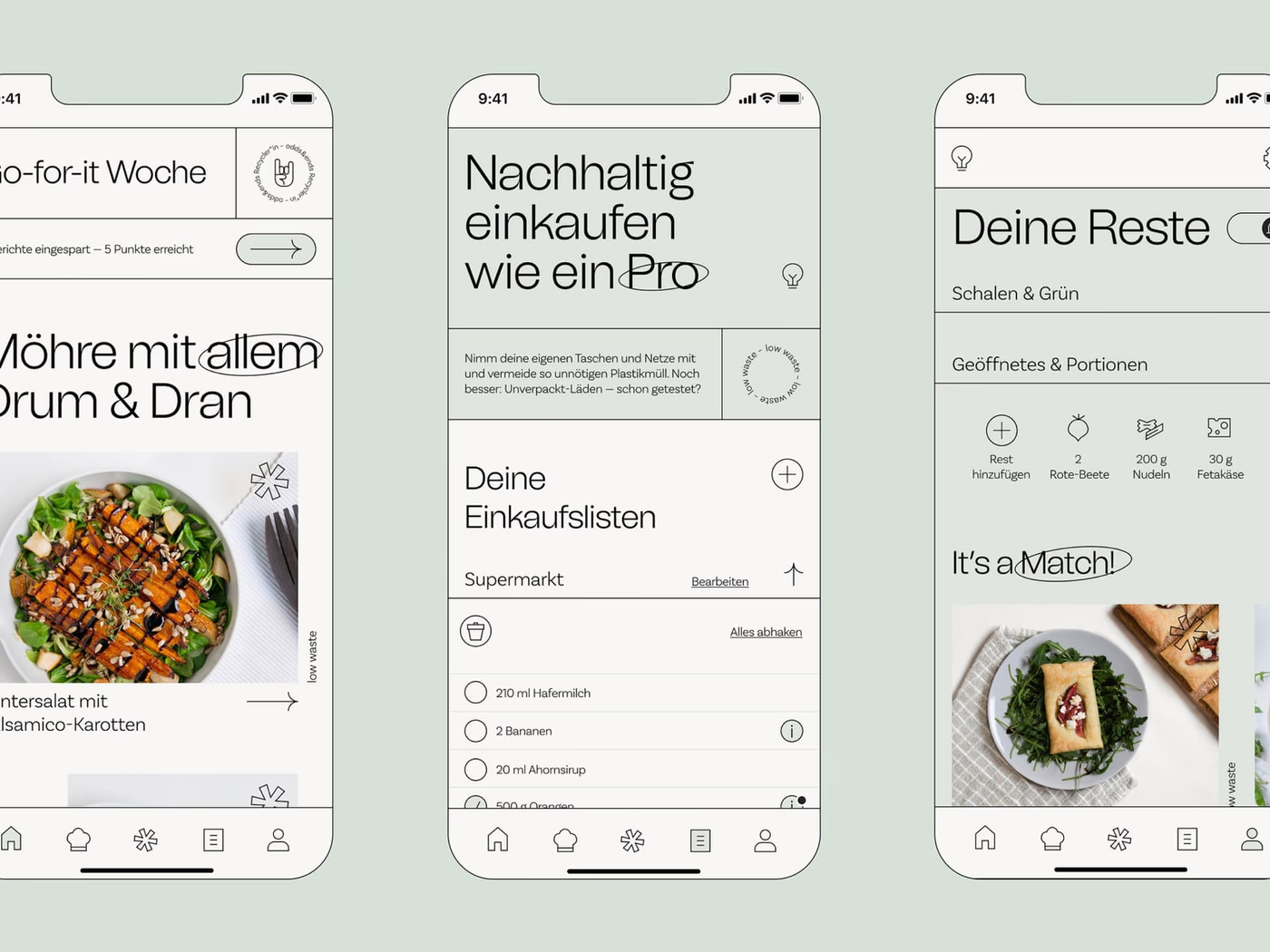
Odds & Ends – App Design
Cook leftovers instead of throwing them away — UI concept and brand world for an app against food waste.
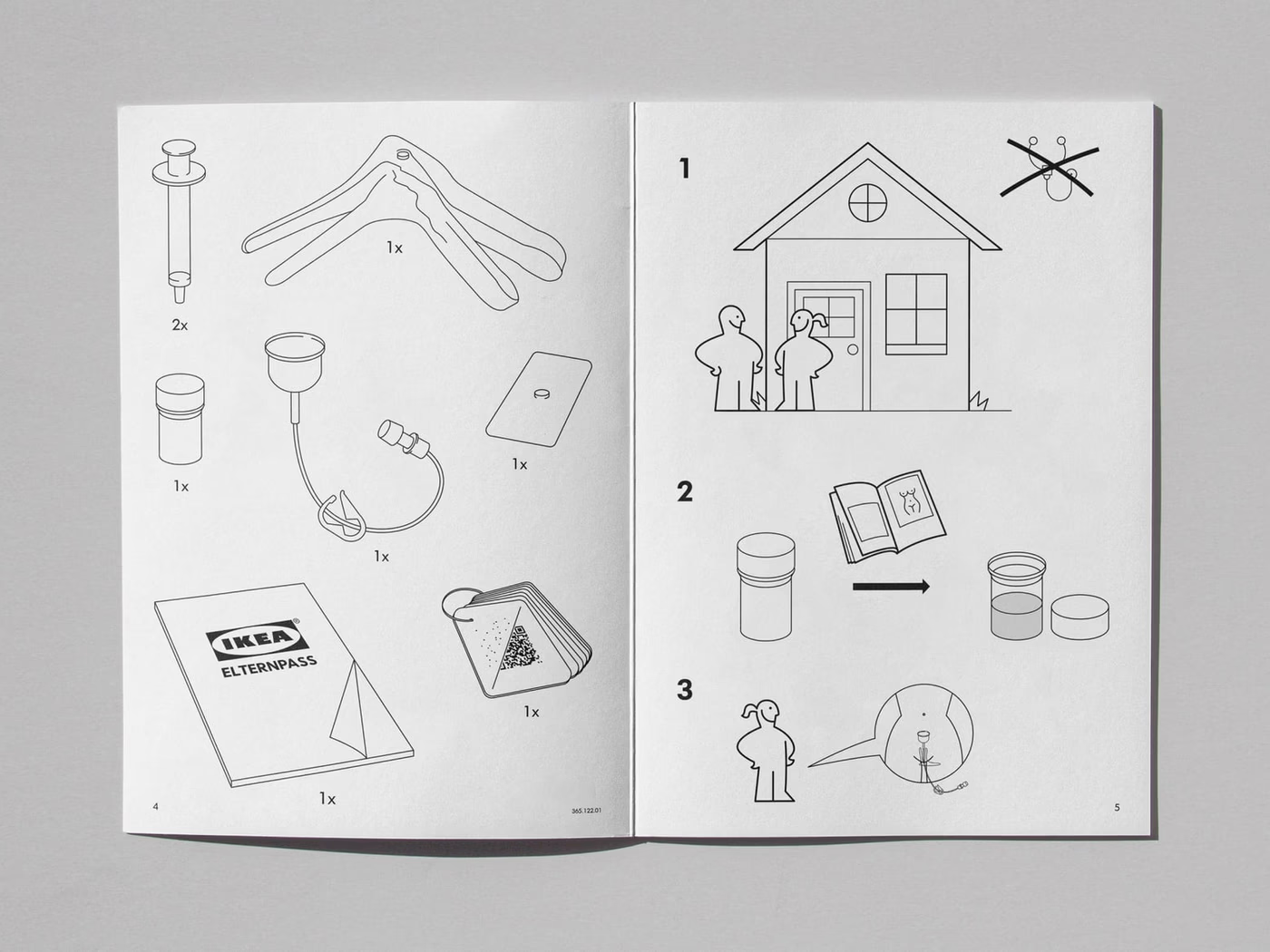
IKEA × AstraZeneca – Concept
Cross-brand concept: how would IKEA package a medical product? A conceptual brand experiment.
Frequently asked
- What does branding for a social enterprise cost?
- A complete social enterprise branding with visual identity, impact report, sales deck, stakeholder briefing, stationery and a donation or lead landing page typically lands between €5,000 and €15,000. We clarify the scope in a first conversation, depending on impact model, size and existing brand work.
- How long does the project take?
- A full brand build for a social enterprise usually takes 8 to 14 weeks. A standalone impact report on existing brand material is realistic in 6 to 8 weeks.
- Does Studio Rotstich design the data visualisations in the impact report and sales deck?
- Yes. We design impact maps, balance overviews and market visualisations as part of each document. The data comes from your internal sources; the translation into readable graphics is our part.
- How do you connect mission and business in one brand without one disappearing?
- In the brand workshop we clarify which argument leads in which document. On the sales deck business leads, mission supports. In the impact report impact leads, business sits underneath as load-bearing structure. That way two documents emerge that work together instead of weakening each other.
- Do you work across Germany?
- Yes. Social enterprises in every region of Germany are a normal part of the project landscape, from B-Corp startups to established non-profit businesses. Briefings, workshops and pitches run entirely remote; on-site visits for investor conversations or impact events are planned separately.
Start a project?
Tell me briefly what it is about — in a 30-minute first conversation we clarify whether and how we can work together.