Branding for Tattoo Studios
A brand that holds from the flash sheet through the deposit card to the aftercare leaflet, so an enquiry becomes a booking and a single piece becomes a referral. For tattoo studios across Germany.
A tattoo studio does not sell ink. It sells trust in a hand. A quiet hour on the bed. The feeling after of having left a piece of your skin with someone who genuinely knew what they were doing. That feeling is what studio branding has to carry from the very first message, before any needle is set.
Custom linework, blackwork, realism or old school, style matters. But what stays in a potential client's head after comparing ten studios? Usually not the best style. Usually the most coherent presence. The flash sheet that looks like something. The deposit card that does not go straight in the bin. The storefront that makes you stop.
Why studio identity is more than a logo
Many tattoo studios have a logo but no brand. The Instagram feed is photos, the entrance is covered in loose papers, the aftercare leaflet is from the supplier's bulk pack. That is not a criticism. That is the everyday reality of small studios that rightly put their energy into the work.
But thinking about brand design does not just win abstract brand points. It wins bookings. Clients who book with a flash sheet in hand rather than just enquiring. Referrals that become clearer because guests can actually explain what makes the studio different.
The Bundesverband Tätowierer (BVT) has long established in its quality standards that professional studios should think about external presentation and hygiene management together. Good branding and a credible public presence go hand in hand, especially since the Tätowiermittel-Verordnung tightened requirements around pigments and sterile workflow.
From flash sheet to façade
Good studio branding does not start with colour or type. It starts with the question of which styles the studio genuinely does best and who it wants to reach with them. Dotwork attracts different clients than neo-traditional. Stick-and-poke needs different imagery than realism. That distinction is not a taste question. It is brand positioning.
From that foundation comes a visual identity: logo, type, palette and an image concept that works on a phone just as well as on the façade. Then the applications that are actually used every day.
Flash sheets are more than price lists. They are consultation tools, portfolios for new clients, references for walk-ins. We design them as systems every artist can fill in themselves, with space for piece number, style, size and price. Each artist's hand stays visible; the frame is the studio identity.
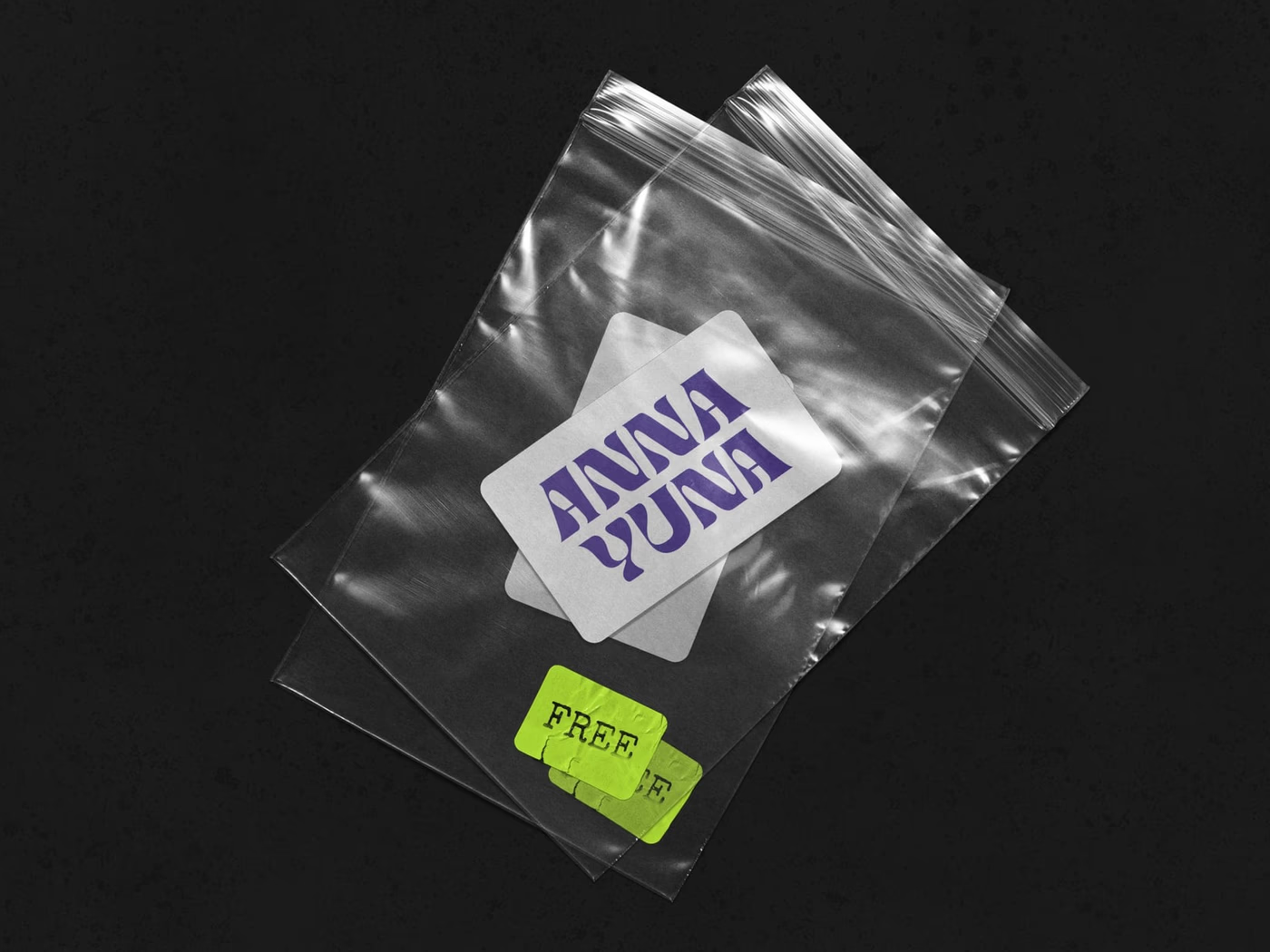
Business card, deposit card, aftercare leaflet: these are the touchpoints that keep working after the appointment. A well-designed business card changes how people pass on a recommendation.
Cover-ups, guest artists, growth
Studios change. Some add guest artists and suddenly need a system that fits two handwriting styles under one roof. Others build an in-house aftercare product line and need label design for balms and bandages. Others open a second location.
A corporate design conceived as a system from the start carries that growth. Cover-up projects in design work like they do in tattooing: the better the foundation, the more can be built on top.
More on how brand identity works across the beauty industry is on the beauty and cosmetics overview. Or go straight to a first conversation.
- 01
A studio identity, not a logo alone
Storefront, flash sheet, deposit card and aftercare leaflet belong to the same language. We build a system that reads on paper, skin and screen.
- 02
Materials that survive a working studio
Deposit cards in a drawer, hygiene certificate by the door, aftercare leaflets in the folder. Every application is designed to still be legible after the hundredth appointment.
- 03
Make the craft visible
Flash sheets are not price tags, they are work catalogues. We design them so the studio's hand is read first, the price second.
- 04
Built to grow
Guest artists, an in-house aftercare line, a second location. The identity carries through instead of being reinvented each season.

Frequently asked
- What does branding for a tattoo studio cost?
- A complete studio branding with logo, visual identity and a basic kit (flash sheet template, deposit card, hygiene certificate, aftercare leaflet, window film) typically lands between €3,500 and €9,000. We clarify scope in a first conversation, depending on studio size, number of artists and existing brand material.
- How long does the project take?
- A full brand build usually takes 6 to 10 weeks. A pure logo refresh with deposit card and aftercare leaflet is realistic in 4 to 6 weeks. For an opening we plan print and window film so the first day of appointments is covered.
- Is the flash sheet built for multiple artists?
- Yes. We build a sheet system every artist can fill in themselves, with space for piece number, size, price and availability. The hand of each artist stays visible, the frame is the studio identity.
- Do you handle window film printing?
- Yes. We recommend workshops we know, gather quotes and oversee installation. You receive a finished result, not a PDF and a list of contacts.
- Do you work across Germany?
- Yes. Tattoo studios in every region of Germany are a normal part of the project landscape, from large cities to small towns. Briefings, workshops and proofs run entirely remote. On-site visits for openings can be planned separately.
Start a project?
Tell me briefly what it is about — in a 30-minute first conversation we clarify whether and how we can work together.